
Last updated September 10, 2026
Full 25-point door and opener safety check with every visit - springs, cables, rollers, tracks, and your LiftMaster or Chamberlain opener included
You get a price before we start. It does not change when the truck arrives.
 Before
 After
After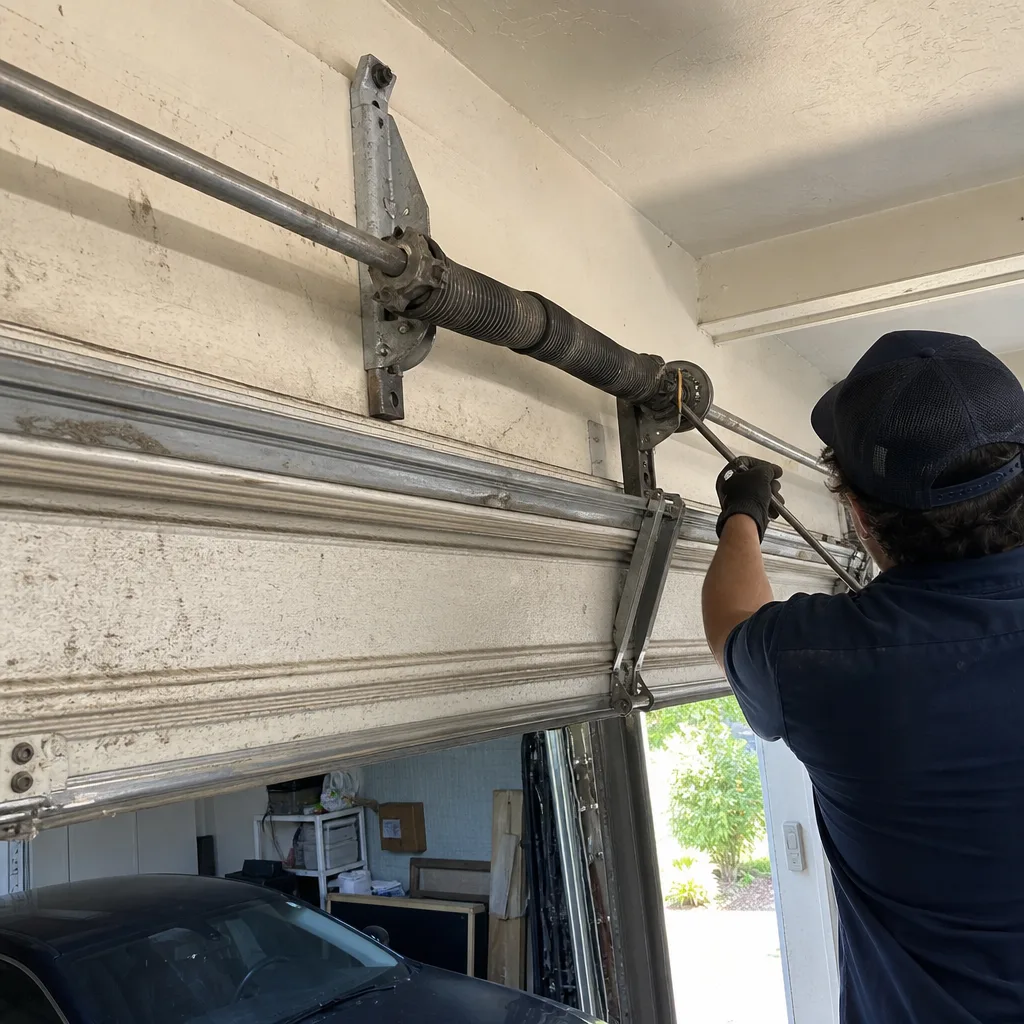 Before
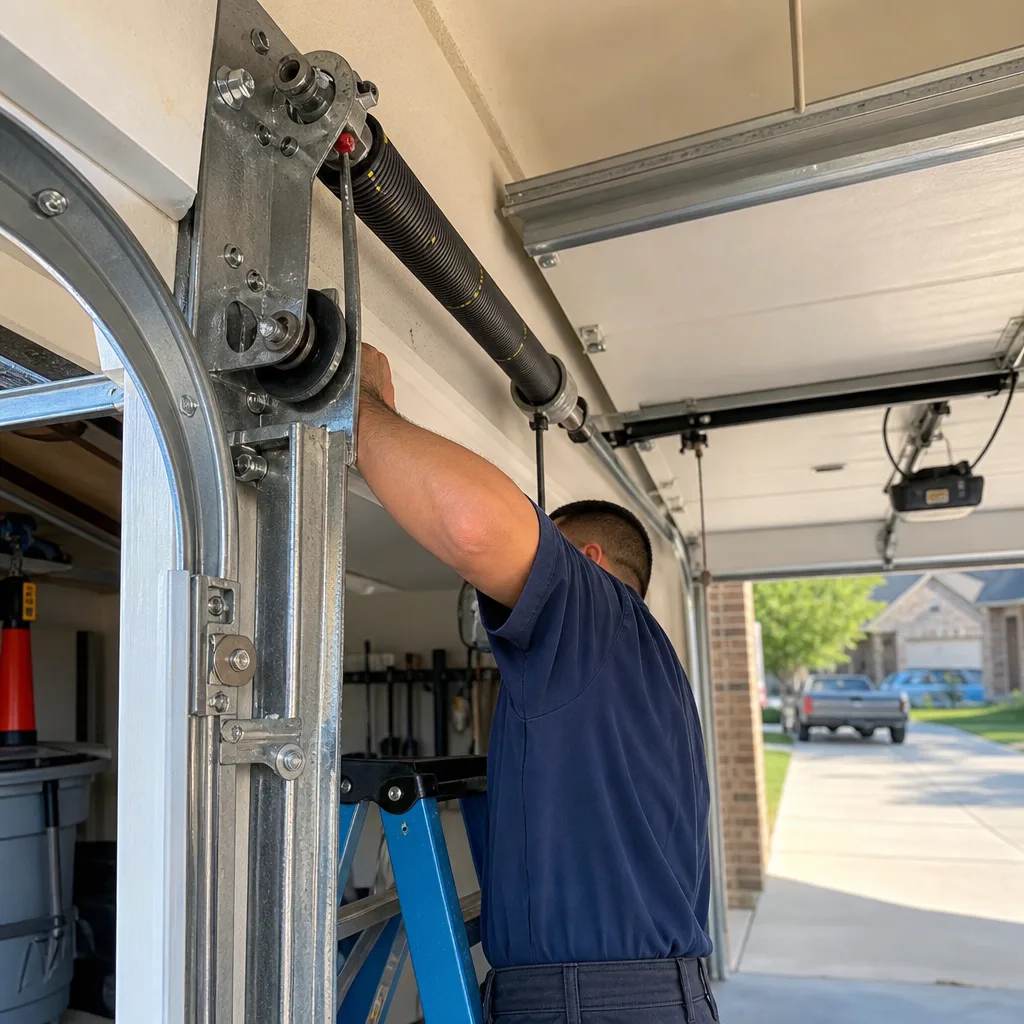 After
After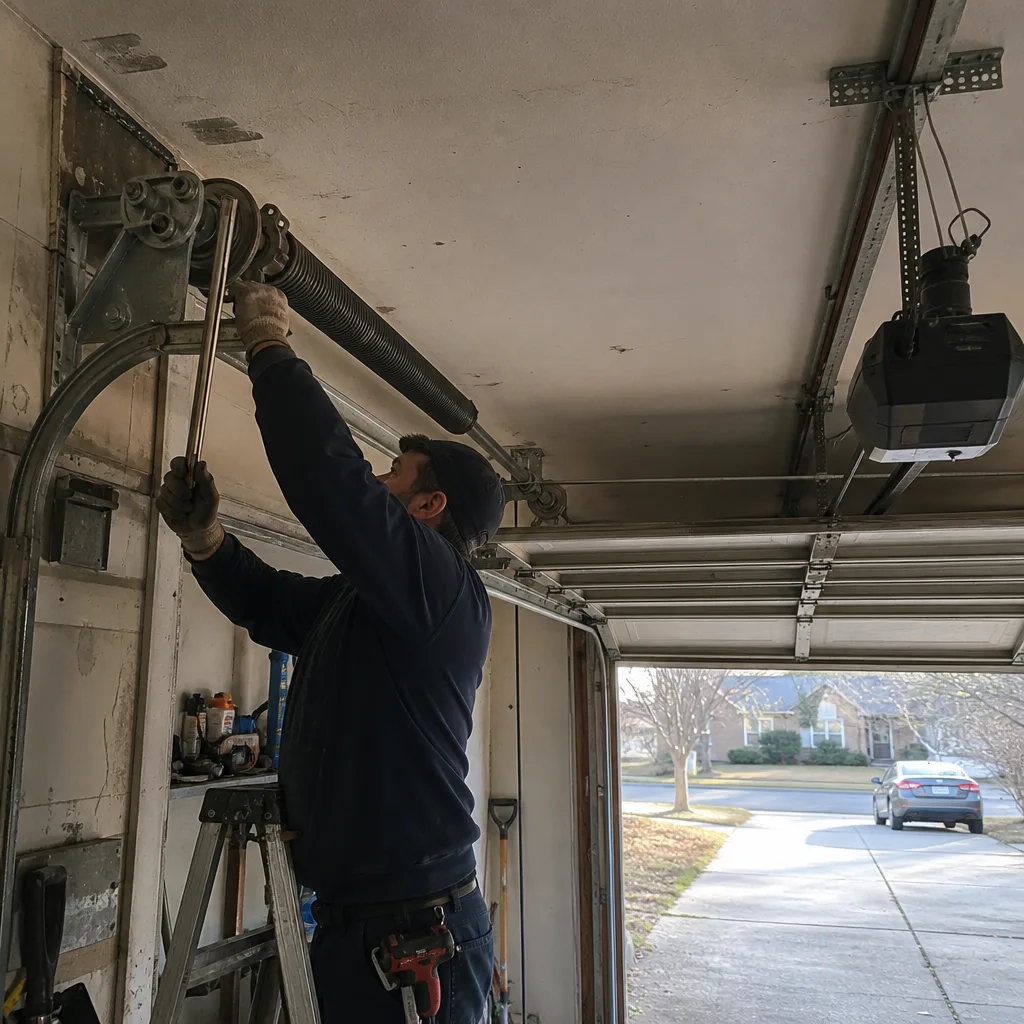 Before
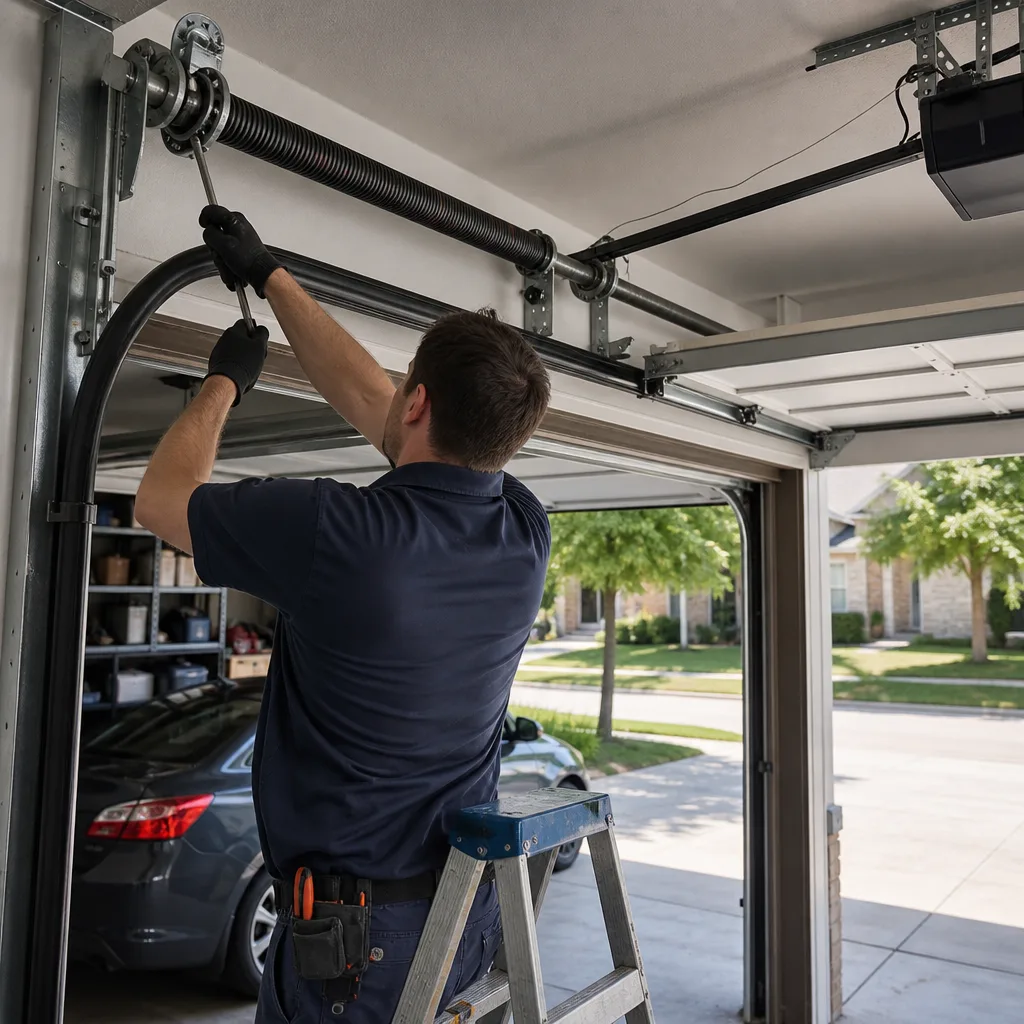 After
AfterGarage Door Repair Maintenance Checklist for Frisco Homeowners
The month most Frisco homeowners call for emergency spring replacement is September - not because springs fail randomly, but because a summer of 100°F heat has already done the damage and the first cool-morning door slam finishes the job. We’ve seen this pattern repeat across Frisco neighborhoods for over 42 years. This guide maps out exactly what to check, when to check it, and how to spot Garage Door Warning Signs: A Frisco Homeowner’s Reference Guide before a small maintenance issue becomes a $300 emergency call. You’ll get a month-by-month task list built for North Texas weather, not generic advice copied from a national blog.
Quick Answer
Frisco homeowners should inspect garage door springs, rollers, and weatherstripping monthly during peak temperature months (June through September and December through February), lubricate moving parts with silicone-based spray quarterly, and schedule a professional balance-and-torque test annually. The critical warning signs are a door that feels heavy to lift manually, grinding or squealing during operation, and gaps of more than 1/2 inch under the bottom seal after spring storms - when in doubt, consult our Garage Door Repair services.
Table of Contents
- How Frisco’s Climate Wears Down Garage Doors Differently
- Month-by-Month Maintenance Checklist for Frisco
- The Three Lubrication Points That Extend Spring Life - and the One Product That Shortens It
- How to Test Photo-Eye Sensor Alignment Yourself
- Bottom Seal and Side Weatherstrip: What Storm Damage Looks Like
- The One-Minute Torque and Balance Check
- Garage Door Opener Maintenance Most Frisco Homeowners Skip
- Common Mistakes to Avoid
- When to Call a Professional
- Frequently Asked Questions
How Frisco’s Climate Wears Down Garage Doors Differently
Frisco sits at the western edge of the Blackland Prairie, where clay-heavy soil shifts with moisture and summer heat radiates off concrete driveways at temperatures 15-20 degrees above air temperature. Your garage door faces a specific set of stresses here that a door in Minneapolis or Phoenix never sees.
The failure sequence we track at Mainspring Garage Door Co. home follows a predictable calendar. March through May brings severe weather: hail, wind-driven rain, and the occasional tornado warning. Water finds its way under bottom seals that have hardened over winter. June through August, attic temperatures above the garage routinely hit 140°F. Extension and torsion springs absorb this heat, accelerating metal fatigue. By late August, many springs in Frisco are living on borrowed time. September’s first cold front drops temperatures 30 degrees overnight. The metal contracts. Homeowners wake to a door that won’t open, or one that crashes down because a spring has snapped.
October through December brings another threat: rapid temperature swings. A 40-degree day followed by a 25-degree night causes photo-eye sensors to drift out of alignment as mounting brackets expand and contract. January and February ice events are rare but memorable - in February 2021, we fielded dozens of calls from Frisco’s Preston Ridge and Stonebriar areas after frozen condensation seized rollers to tracks.
The takeaway: Frisco maintenance is not about following a generic quarterly schedule. It’s about anticipating what the next 60 days of weather will do to your door.
Month-by-Month Maintenance Checklist for Frisco
This checklist builds on what we’ve learned serving Frisco since 2016. Adjust slightly based on whether your door faces south (more sun exposure) or north, and whether your garage is attached or detached (attached garages see more temperature fluctuation from house HVAC).
January-February: Post-Winter Recovery
- Inspect bottom seal for hardening or cracking. Press your thumbnail into the rubber. If it doesn’t spring back, it’s losing flexibility.
- Check side weatherstrip (vinyl or brush type) for gaps where cold air has been entering. In Frisco’s older neighborhoods like Frisco Square and The Trails, original vinyl strips often shrink after 5-7 years.
- Test manual release on opener. Pull the red handle and lift the door by hand. It should move smoothly and stay open at waist height.
- Look for rust on bottom rollers and hinges. Humidity from January fog events collects at the lowest points.
March-May: Storm Season Preparation
- Replace bottom seal if you found hardening in January. A compromised seal during spring storms means water, leaves, and insects in your garage.
- Tighten all track bolts and roller bracket fasteners. Wind vibration loosens hardware over time.
- Clear drain channels in concrete threshold. Frisco’s clay soil doesn’t absorb heavy rain quickly; standing water accelerates seal rot.
- Test auto-reverse with a 2×4 laid flat in the door’s path. The door should reverse within 2 seconds of contact.
June-August: Heat Stress Management
- Lubricate torsion spring, rollers, and hinges with silicone-based spray. Do this in early June, before peak heat.
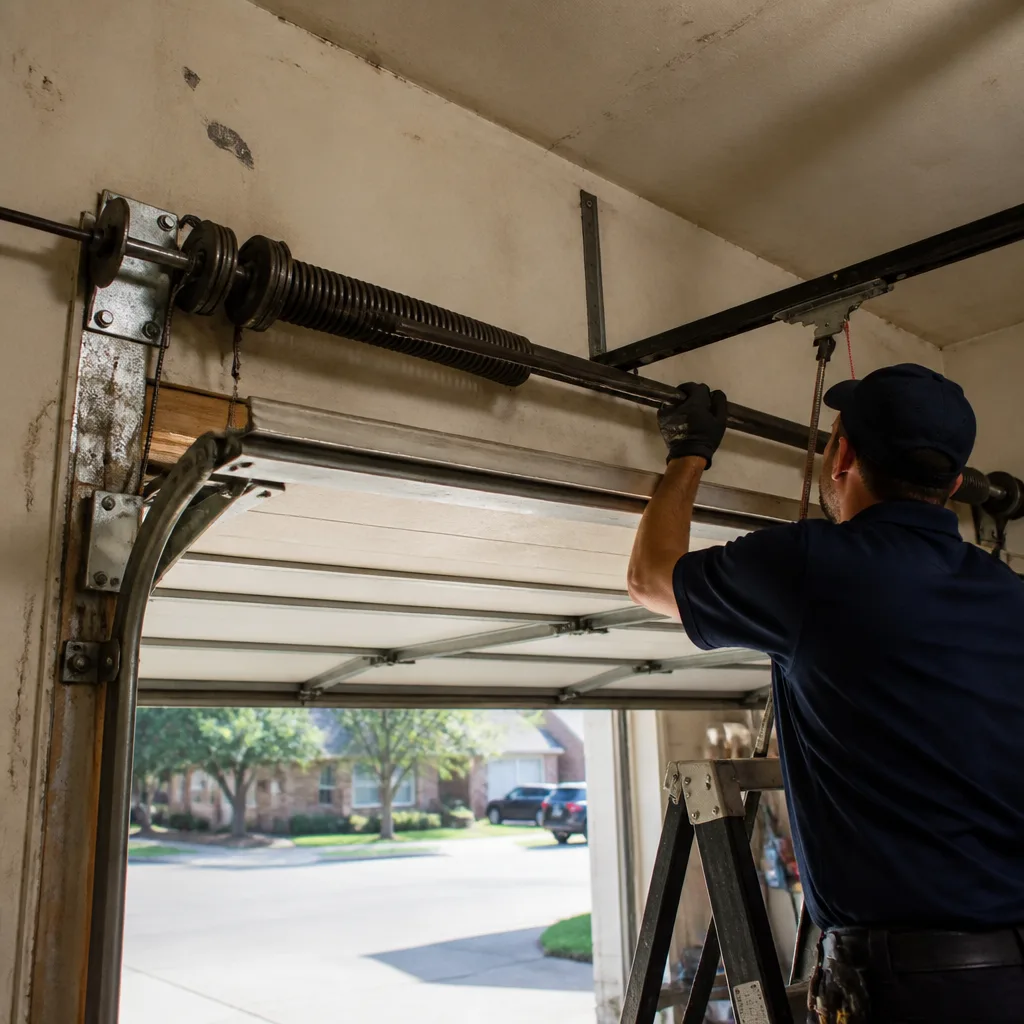
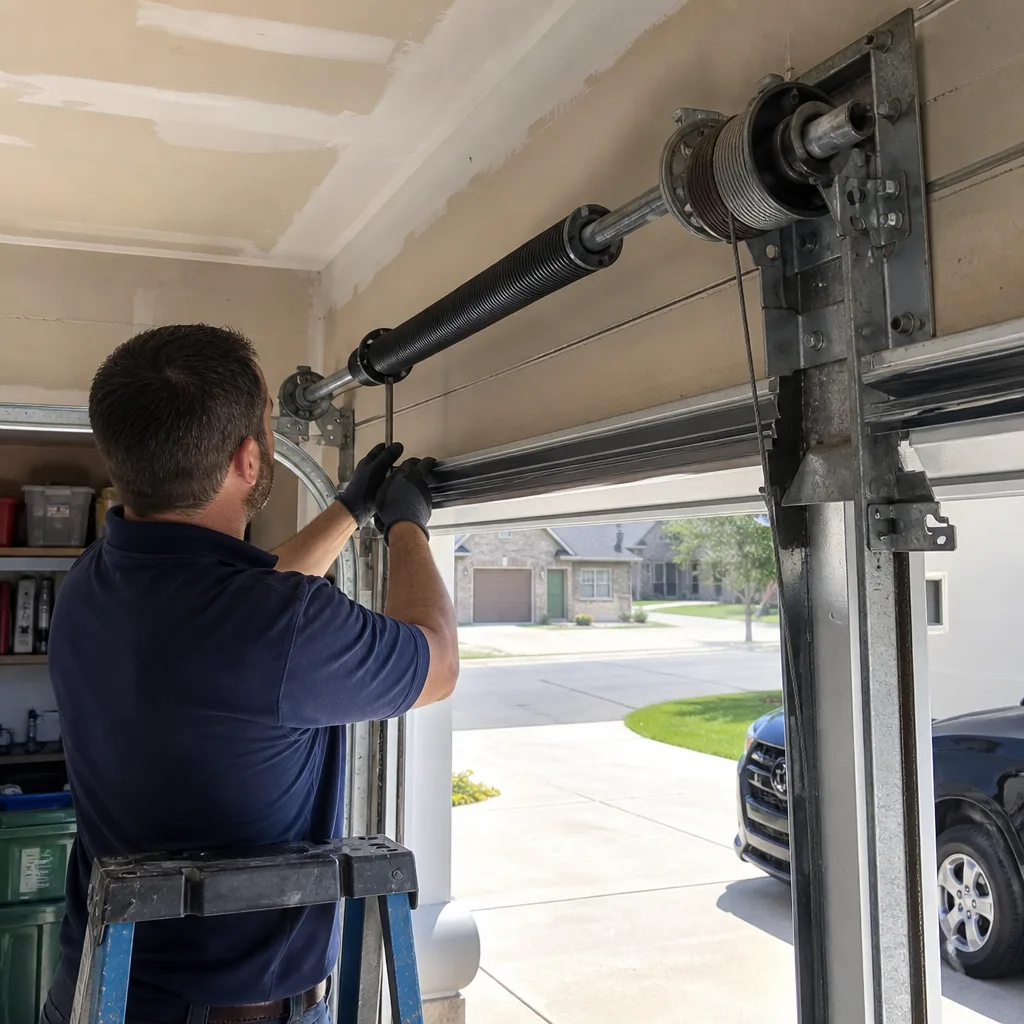
- Inspect spring coils for gaps or separation. A torsion spring with visible daylight between coils is nearing failure.
- Check opener motor housing for dust buildup. Vacuum the exterior vents. Overheating is the leading cause of summer opener failure in Frisco.
- Test door balance (see the one-minute test below). If the door feels heavy, the springs are losing torque in the heat.
September-October: Transition Watch
- Re-lubricate after summer heat has degraded the June application.
- Inspect photo-eye sensors for alignment. Temperature swings in September and October are the leading cause of sensor drift we see in Frisco.
- Listen for new noises: grinding, popping, or squealing that wasn’t there in August. The first cool mornings reveal problems heat masked.
- Schedule professional inspection if your door is over 8 years old and hasn’t had spring service.
November-December: Pre-Winter Seal
- Final weatherstrip check before consistent cold arrives.
- Lubricate lock mechanism if present. Frisco’s dry winter air causes sticking.
- Verify opener safety features one more time before holiday travel season.
- Clear tracks of debris after autumn leaf drop. Oak and pecan leaves from Frisco’s mature neighborhoods pack into lower track sections.
The Three Lubrication Points That Extend Spring Life - and the One Product That Shortens It
Proper lubrication is the single most cost-effective maintenance you can perform. It takes five minutes and costs under $10. Doing it wrong costs you a spring replacement.
The Three Points
Torsion spring or extension springs. These carry the full weight of your door. In Frisco’s heat, the metal expands and micro-friction between coils accelerates wear. A light coating of silicone spray reduces this friction without attracting dust. Apply enough to coat the surface, not so much that it drips onto the floor.
Rollers. Whether steel or nylon, rollers need lubrication where the shaft meets the bracket. Nylon rollers have sealed bearings and need less attention; steel rollers with exposed bearings need quarterly service. In Frisco, dust from construction in newer developments like Newman Village and Phillips Creek Ranch works into unsealed bearings quickly.
Hinges. The pivot points where door sections fold. These take the most direct stress during opening and closing. A dry hinge squeals first, then wears oval-shaped holes that let door sections sag.
The Product That Shortens Spring Life
WD-40. We see it in garages across Frisco, and we wish we didn’t.
WD-40 is a solvent and water displacer, not a lubricant. It cleans, it penetrates, and it evaporates within days - leaving metal surfaces drier than before. Worse, its solvent properties break down existing grease and attract dust, creating an abrasive paste on springs and rollers. If you’ve been using WD-40 on your garage door, stop. Clean the residue with a rag and switch to a silicone-based garage door lubricant from any hardware store. Look for products labeled specifically for garage doors, or use a light machine oil on hinges if silicone isn’t available.
We’ve replaced springs in Frisco homes that failed at 8,000 cycles instead of 15,000 because WD-40 stripped the factory protective coating. That’s a difference of 3-5 years of normal use.
How to Test Photo-Eye Sensor Alignment Yourself
Photo-eye sensors sit 4-6 inches above the floor on both sides of your door track. They transmit an invisible beam across the door opening. If anything breaks that beam while the door is closing, the opener reverses. When sensors drift out of alignment, the door refuses to close or reverses randomly.
In Frisco, we see sensor alignment issues spike from October through December. The temperature swings cause metal mounting brackets to expand and contract. A bracket that was tight in September loosens by November.
Step-by-Step Self-Test
- Locate both sensors. They face each other across the door opening, usually with small LED lights visible.
- Check that both LEDs are lit steady. A blinking light or unlit LED indicates power or wiring issues, not just alignment.
- Clean the lenses with a soft cloth. Dust, spider webs, and lawn chemical residue from Frisco’s active growing season obscure the beam.
- Measure the gap. Use a tape measure to check the distance from each sensor to the floor. They should match within 1/4 inch.
- Check horizontal alignment. Tie a string between the two sensors at lens height. It should touch both lenses at center. If the string misses one lens or rests high/low, the bracket is bent or loose.
- Test the beam interruption. Close the door with the remote, then wave a broomstick through the beam. The door should reverse immediately.
- Test the 6-inch height rule. Roll a basketball through the beam path. It should interrupt the beam and reverse the door. If the beam is aimed too high, a small child or pet could pass under it.
When to Call Instead of Adjust
If the LED lights won’t stay steady after cleaning, if wiring is damaged, or if the gap between sensors exceeds 1/2 inch vertical difference, the bracket or wiring needs professional attention. Forcing a misaligned sensor to work by taping or wedging it creates a safety hazard. Garage Door Opener in Frisco service includes full sensor realignment and safety testing.
Bottom Seal and Side Weatherstrip: What Storm Damage Looks Like
Frisco’s spring storm season tests every seal on your home. The difference between normal wear and storm damage matters, because one needs routine replacement and the other may indicate structural issues.
Normal Wear Signs
- Gradual flattening of the bottom seal’s bulb or fin shape
- Surface cracking that follows the material’s flex pattern
- Light hardening that still allows some thumb-press recovery
- Even wear across the full door width
Storm Damage Signs
- Tears or punctures from wind-driven debris
- Seal pulled partially from the retainer channel
- Water staining on garage floor in a line matching the door edge
- Uneven wear: one side compressed, the other still full profile (indicates door or frame shift)
- Insect or rodent entry points that appeared suddenly after a storm
In Frisco’s newer construction, we often find bottom seals that failed within 3-4 years because the builder used PVC retainer channels that become brittle in attic heat. The channel cracks, the seal won’t stay seated, and water enters. A metal retainer channel upgrade solves this permanently.
Side weatherstrip (the vinyl or brush strips on the door frame) shows different patterns. Brush type wears by filament loss; vinyl type by cracking and shrinkage. After spring 2024’s hail events in Frisco’s northwest neighborhoods, we replaced dozens of vinyl strips that had turned brittle from UV exposure and then shattered on impact.
The 1/2-inch rule: If you can slide a flathead screwdriver more than 1/2 inch under the bottom seal when the door is closed, air, water, and pests are entering. Replace the seal.
The One-Minute Torque and Balance Check
This test tells you whether your springs are doing their job. It requires no tools and takes 60 seconds. We teach it to every Frisco homeowner who asks, with one critical safety note: if the door feels heavy or won’t stay open, do not attempt to adjust springs yourself. Torsion springs store lethal energy. This is a diagnostic test, not a repair procedure.
The Test
- Close the door fully.
- Pull the red manual release handle on the opener to disconnect the door from the motor.
- Lift the door by hand from the center handle. It should move smoothly with moderate effort. If it feels like lifting a heavy weight, the springs have lost torque.
- Raise the door to waist height (approximately 3 feet off the ground) and release it gently. A properly balanced door stays in place or drifts slowly. A door that falls closed has weak or broken springs. A door that rises on its own has excessive spring tension.
- Lower the door to the closed position and re-engage the opener.
What the Results Mean
A door that falls from waist height is dangerous. The springs are no longer counterbalancing the door’s weight, which means the opener is straining and the door could crash if the opener fails or the release is pulled. We’ve seen this exact scenario in Frisco’s older homes where original springs have exceeded their 10,000-cycle rating.
A door that stays put or drifts slightly is balanced correctly. Check this quarterly in Frisco, more often if your door faces south and absorbs extra heat.
If this test reveals a problem, call for service. Spring adjustment or replacement is not a DIY project. The torque in a standard torsion spring can cause serious injury or death if released improperly. Garage Door Repair in Frisco from Mainspring includes full balance testing with every service call.
Garage Door Opener Maintenance Most Frisco Homeowners Skip
The opener is the most complex component and the most neglected. Modern openers from Chamberlain, Genie, and other major brands are reliable, but they have specific maintenance needs that extend their service life beyond the 10-15 year average.
What to Check Quarterly
- Force settings. Test auto-reverse monthly during storm season. Place a 2×4 flat on the floor where the door contacts it. The door should reverse on contact. If it doesn’t, the down-force setting needs adjustment. In Frisco, temperature swings affect opener sensitivity; we adjust force settings more often in fall and spring.
- Chain or belt tension. A sagging chain slaps the rail and wears sprockets. A belt that’s too tight strains the motor. Check your owner’s manual for the specific sag measurement, typically 1/2 to 3/4 inch at rail midpoint.
- Rail lubrication. The trolley travels along a metal rail. Light silicone spray on the rail surface reduces friction and noise. Don’t lubricate the chain or belt itself; modern units have internal lubrication.
- Light bulb type. LED bulbs can interfere with opener radio frequency. If your remote works intermittently, try an incandescent bulb in the opener socket. We’ve traced dozens of “opener failure” calls in Frisco to LED bulb interference.
When Opener Age Matters
Openers manufactured before 1993 lack modern safety features. If your Frisco home still has a pre-1993 unit, replacement is not just maintenance; it’s safety. Current models include force-limiting auto-reverse, rolling-code security, and battery backup for power outages. Garage Door Installation in Frisco includes opener replacement with full safety testing.
For newer openers, the most common Frisco failure we see is logic board damage from power surges during spring storms. A simple surge protector on the opener outlet prevents this $200-$400 repair.
Common Mistakes to Avoid
- Using WD-40 as a lubricant. It strips protective coatings and attracts dust. We’ve replaced springs years early because of this single mistake.
- Ignoring a single noisy roller. One failing steel roller increases strain on the entire system. In Frisco’s heat, the added friction accelerates spring fatigue across all components.
- Power-washing the door and seals. High-pressure water forces itself behind seals and into track grease, washing away lubrication. Use a garden hose and mild soap instead.
- Testing auto-reverse with a rigid object too tall. The 2×4 test uses a 1.5-inch board laid flat. Using a taller object tests the wrong safety feature and gives false confidence.
- Delaying spring service after the balance test fails. A heavy door strains the opener motor and cable drums. We’ve seen $200 spring jobs become $600 repairs because the homeowner waited.
- Assuming all openers use the same remote frequency. Aftermarket remotes programmed without checking compatibility can lock out factory remotes. In Frisco’s dense neighborhoods, this also risks opening a neighbor’s door if frequencies match.
- Skipping maintenance on a “new” door. Even doors from quality brands like Clopay and Amarr need quarterly inspection and annual professional service. Warranty coverage often requires documented maintenance.
When to Call a Professional
Some maintenance is homeowner work. Some is not. Call a technician when you encounter any of the following: a torsion spring with visible coil separation or a loud snap during operation; cables that have frayed, unwound from drums, or show rust; a door that has come off its tracks; opener motor that hums but doesn’t move the door; or any situation where the manual release doesn’t allow smooth hand operation. For help choosing the right pro, see How to Hire a Garage Door Contractor in Frisco: A Step-by-Step Guide.
These involve high-tension components that can cause serious injury without proper tools and training. We’ve responded to emergency calls in Frisco where a homeowner’s DIY attempt made a simple repair into a full door replacement.
Mainspring Garage Door Co. offers free estimates in Frisco - call (945) 495-3756. Our technicians arrive with springs, cables, and openers on the truck, so most jobs finish in a single visit. The price is stated before any work begins, and every job carries our 90-Day Done Right Promise in writing.
Frequently Asked Questions
Professional seasonal tune-ups in Frisco typically run $89-$150, depending on door size and components inspected. Mainspring’s $89 Seasonal Tune-Up includes full balance testing, safety inspection, lubrication, and written condition report. Call (945) 495-3756 to schedule - estimates are free.
Lubricate the three critical points (springs, rollers, hinges) in early June before peak heat, again in September after summer stress, and once in December before cold arrives. That’s three times yearly for Frisco’s climate, not the generic “twice yearly” advice you’ll find elsewhere.
No. Torsion springs store enough torque to cause serious injury or death if mishandled. The winding cones and cable drums require specialized tools and training. In Frisco, we see emergency calls every month from homeowners who attempted this. The cost of professional spring replacement is far less than an emergency room visit.
Metal tracks contract in cold, and lubricant thickens. In Frisco, the rapid temperature drops of October and November catch homeowners off guard. The fix is usually track cleaning and fresh silicone lubricant, but persistent sticking can indicate track misalignment from foundation settling common in Frisco’s clay soils.
A quality steel door from Clopay or Amarr should last 20-30 years with proper maintenance in Frisco. Springs typically last 7-12 years depending on cycle count and heat exposure. Openers average 10-15 years. The Frisco homes that reach these upper limits are the ones with documented annual professional service.
Yes. Mainspring technicians are factory-familiar with Chamberlain, Genie, Clopay, Amarr, and all other major brands. Our trucks carry the most common springs, cables, rollers, and opener components, which is why most Frisco repairs finish in a single visit. Call (945) 495-3756 to confirm availability for your specific model.
The Bottom Line
Frisco garage doors fail in predictable patterns: heat-stressed springs in late summer, swollen seals after spring storms, sensor drift during fall temperature swings. A maintenance calendar tuned to these patterns prevents emergencies and extends component life by years. The five-minute monthly checks - balance test, visual spring inspection, seal compression check - catch problems while they’re still inexpensive to fix. The annual professional inspection addresses what you can’t see: spring torque measurement, cable wear analysis, and opener force calibration. Maintenance is not complicated. It is specific. And in Frisco’s climate, specificity is what keeps your door running quiet and your repair bills low. For more guides & resources, explore our blog.
Written by Carl Dutton, Owner at Mainspring Garage Door Co., serving Frisco since 2016.