
Last updated September 10, 2026
Full 25-point door and opener safety check with every visit - springs, cables, rollers, tracks, and your LiftMaster or Chamberlain opener included
You get a price before we start. It does not change when the truck arrives.
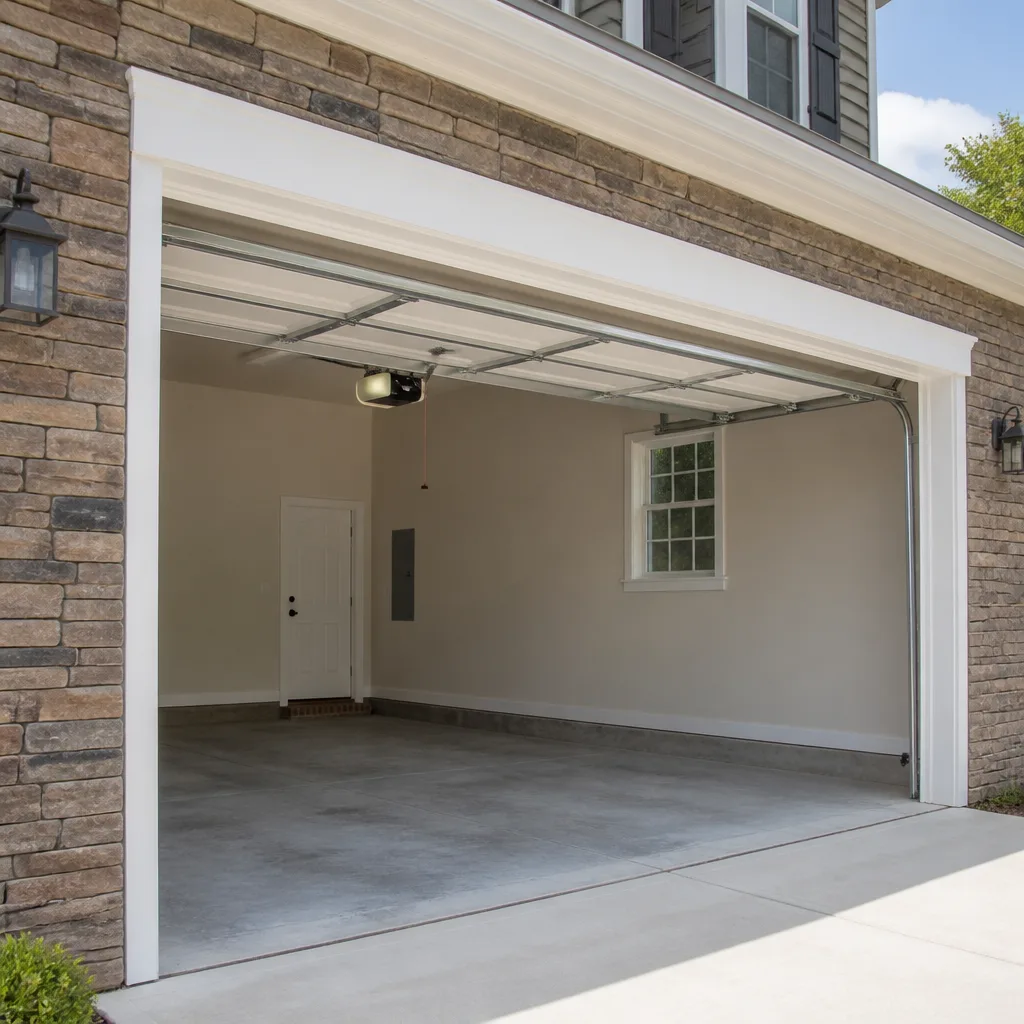
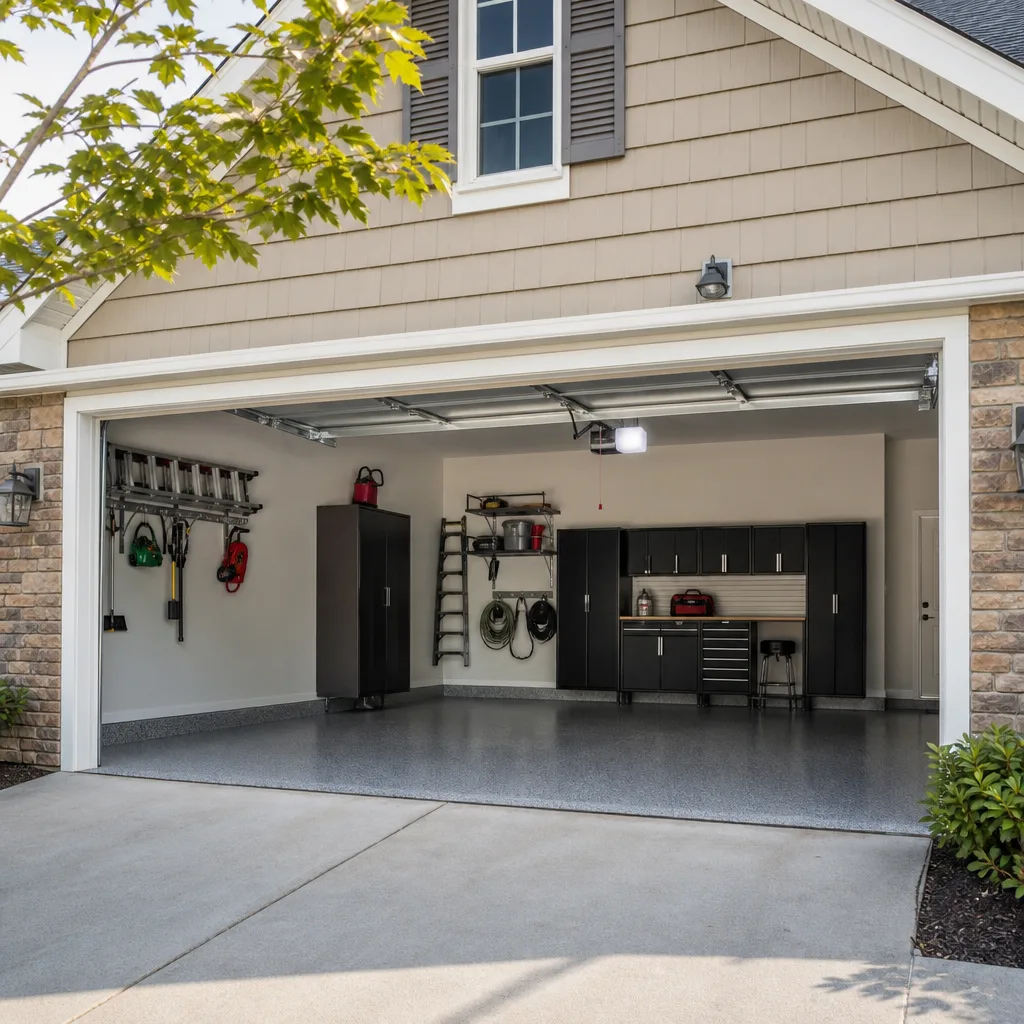
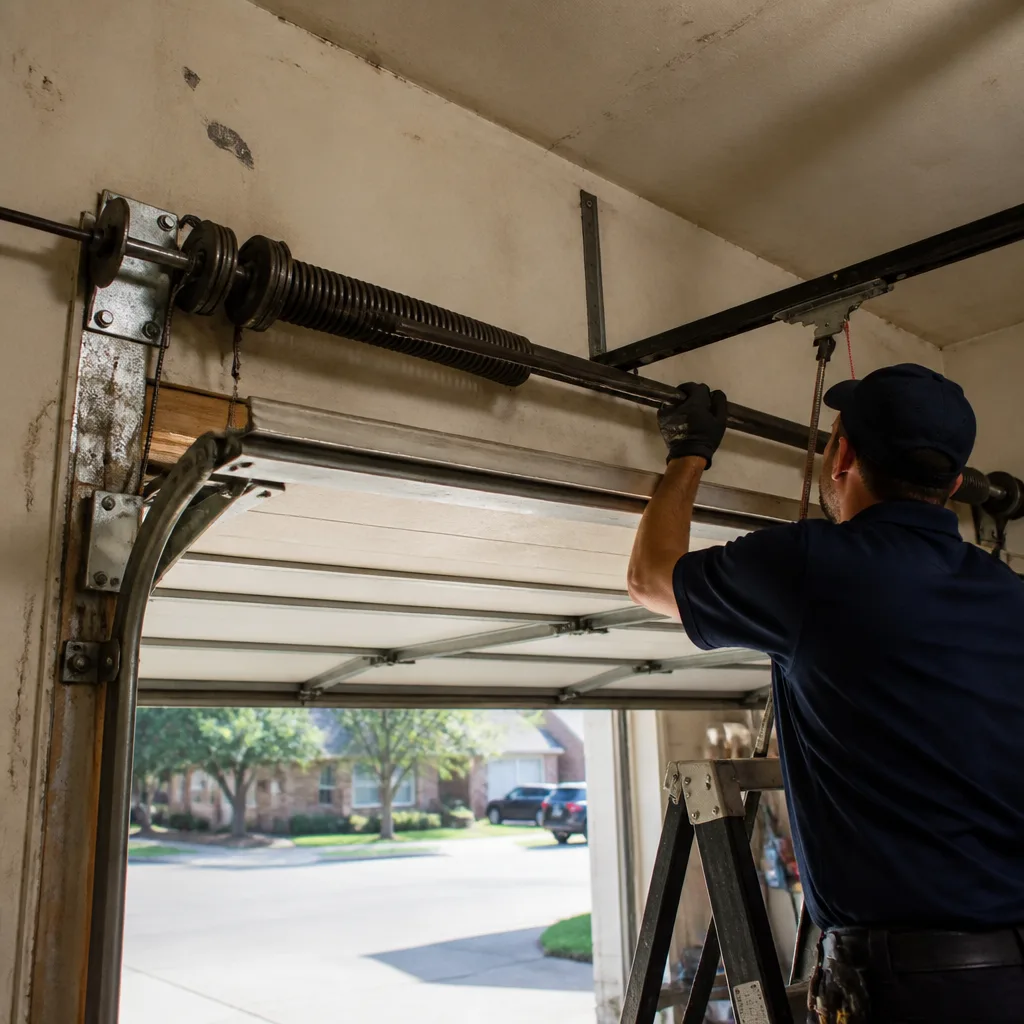 Before
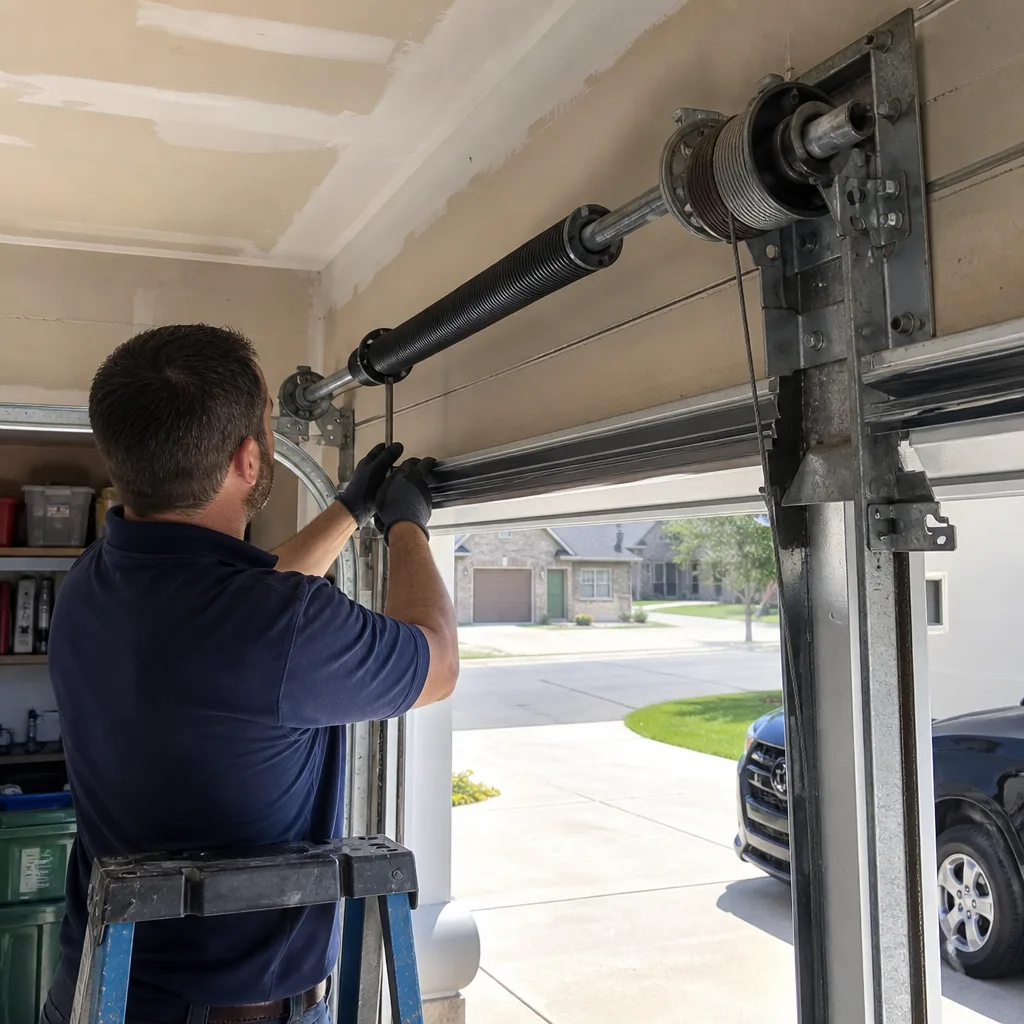 After
After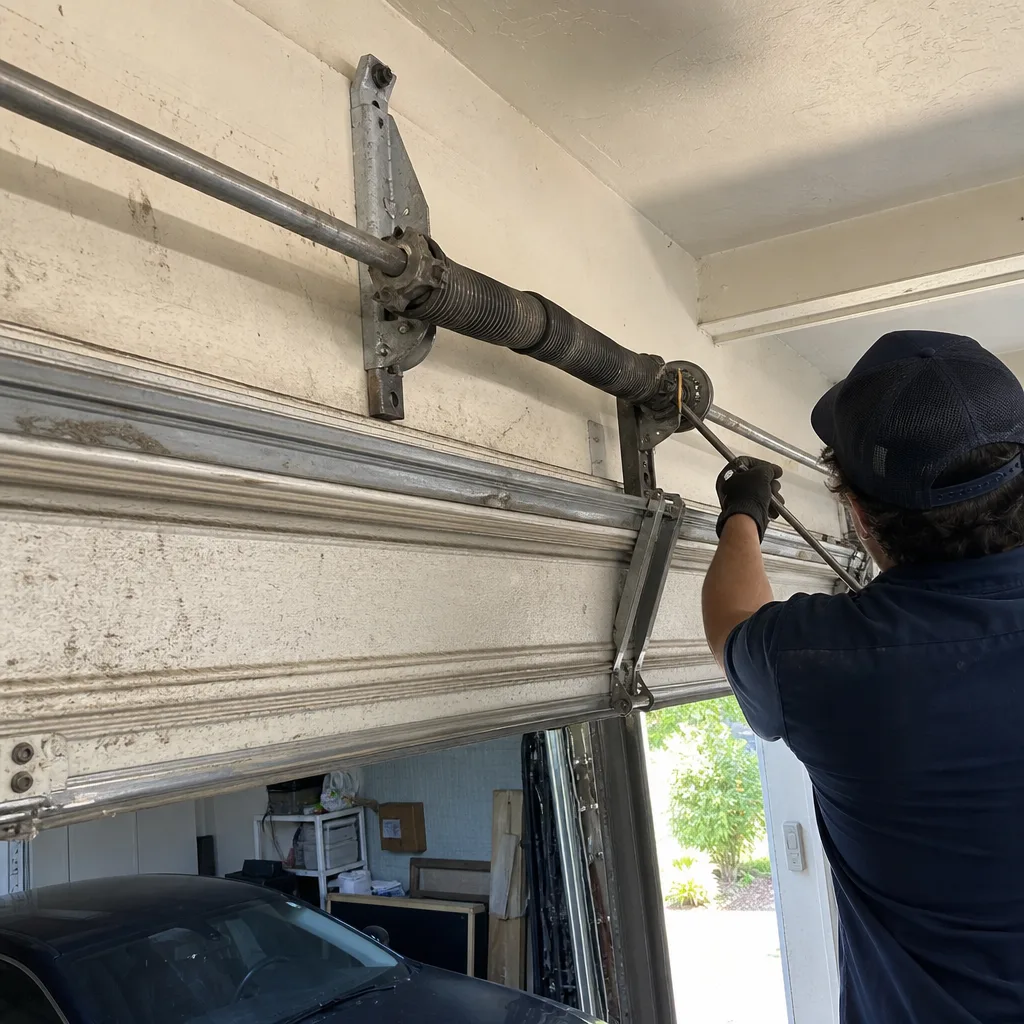 Before
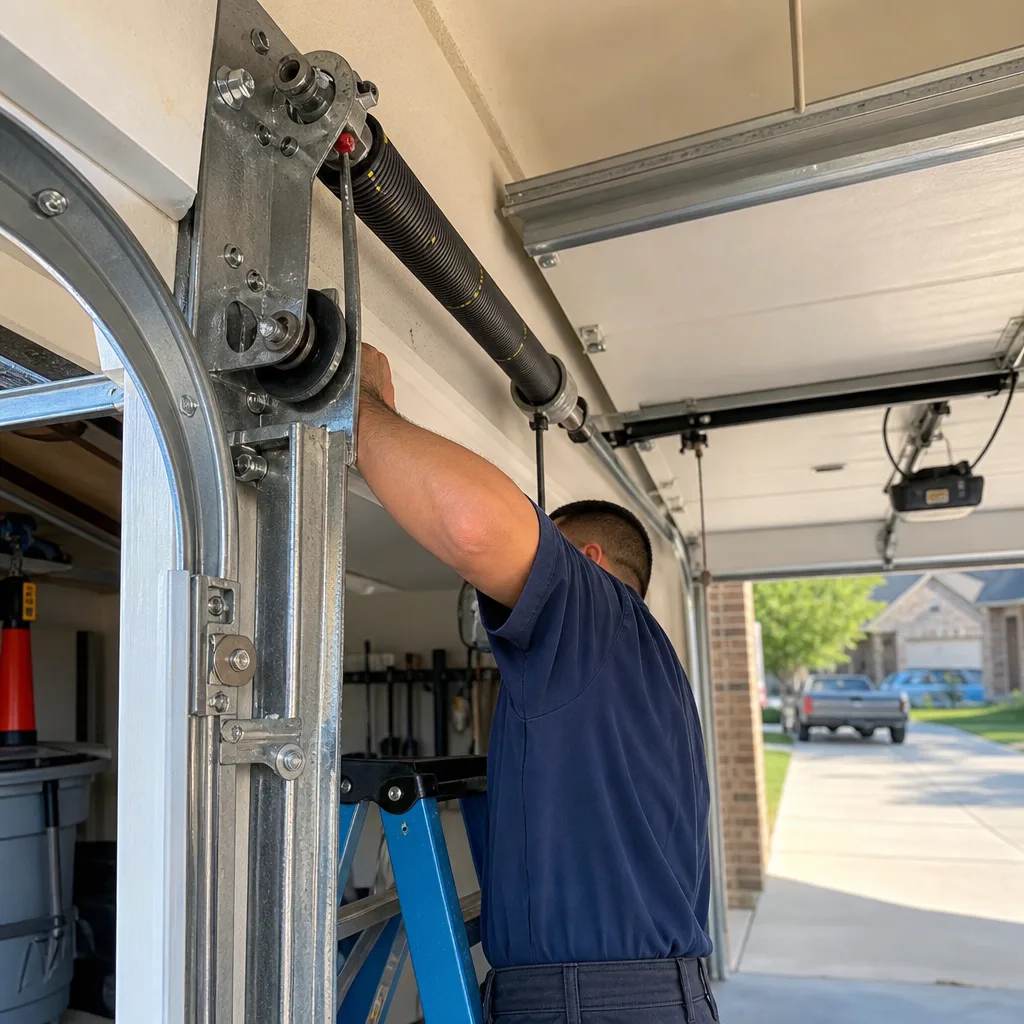 After
After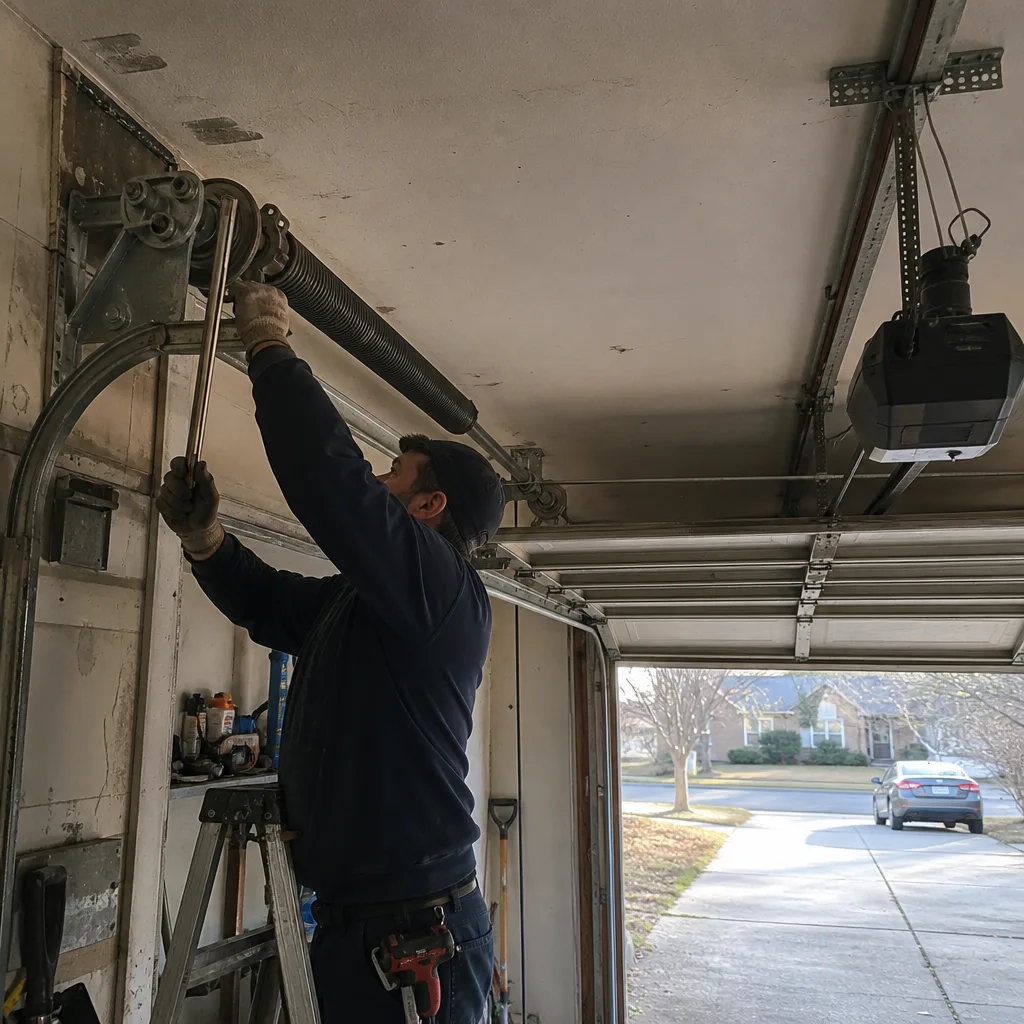 Before
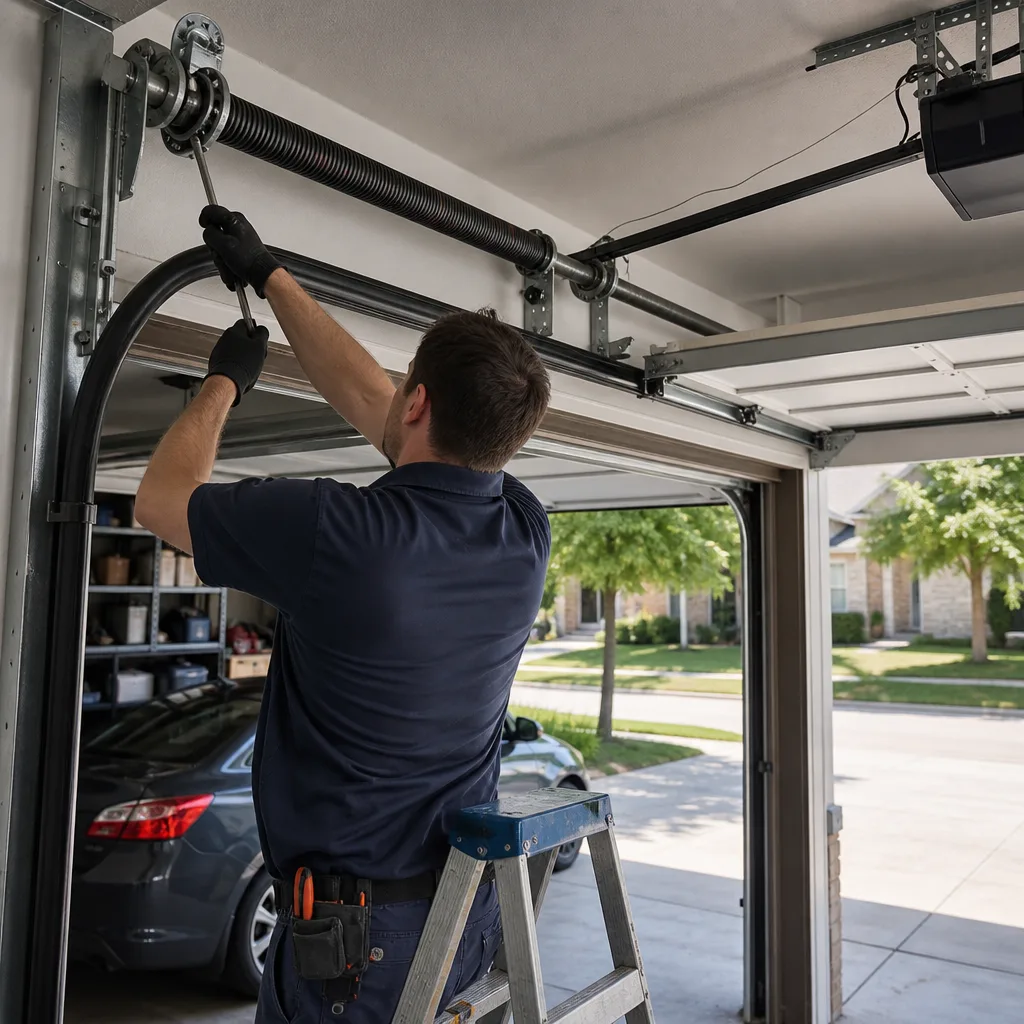 After
AfterGarage Door Permits, Codes & Inspections in TX: What You Need to Know
Replacing a garage door in Frisco does not always require a city permit, but installing the wrong fire-rated door between an attached garage and living space can void your homeowner’s insurance without anyone telling you. We’ve been called out to homes in Frisco’s Newman Village and The Trails where a contractor’s “simple swap” created a code violation that cost the homeowner thousands to fix at resale. This guide explains when Texas garage door work needs permits, which codes actually matter, and how to protect yourself from the liability gap that opens when a job is done without proper inspection. For related reading, see our Garage Door Warning Signs: A Frisco Homeowner’s Reference Guide.
Quick Answer
In Texas, garage door replacement typically does not require a city permit unless structural framing, electrical work, or a new opening is involved. However, fire-separation doors between attached garages and living spaces must meet IRC Section R302.6 standards, and Frisco HOAs often impose stricter architectural requirements than city code. When permits are required, inspections verify fire rating, hardware function, and proper installation, with most Frisco inspections scheduled within 2-3 business days.
Table of Contents
- When Are Permits Required for Garage Door Work in Texas?
- Frisco-Specific Rules: City Code Meets HOA Requirements
- Fire Separation Requirements for Attached Garages (IRC R302.6)
- What Happens During a Garage Door Inspection
- The Hidden Risks of Unpermitted Work
- Permit Costs and Timeline in Frisco
- Should Your Contractor Pull the Permit or Should You?
- Common Mistakes to Avoid
- When to Call a Professional
- Frequently Asked Questions
- The Bottom Line
When Are Permits Required for Garage Door Work in Texas?
Texas operates under a largely permissive home-repair culture. The state does not mandate permits for simple garage door replacement at the state level, leaving decisions to individual municipalities. This creates confusion, because “not required” does not mean “not regulated.”
In Frisco, the Building Inspections Department follows the 2021 International Residential Code (IRC) with local amendments. A permit is required when garage door work involves any of these triggers:
- Structural modification: Widening the opening, cutting into load-bearing walls, or altering header dimensions above the door
- New construction: Installing a door in a previously open carport or new garage build
- Electrical work: Adding or relocating outlets, hardwiring openers, or modifying garage electrical circuits
- Fire-separation changes: Replacing a door between an attached garage and the home’s interior (mud room, utility room, kitchen)
- Exterior door conversion: Converting a window or wall section into a garage door opening
A straight swap of an existing garage door on existing tracks, with no electrical changes, typically falls outside permit requirements. But here’s where Frisco homeowners get tripped up: the definition of “existing tracks” matters. If your old door was a 7-foot height and you’re upgrading to an 8-foot door for a taller vehicle, the header and side jambs need modification. That is structural work, and it requires a permit.
We’ve seen this scenario repeatedly in Frisco’s older neighborhoods like Preston Vineyards and Frisco Square, where original 1980s and 1990s homes have 7-foot doors that owners want to modernize. The homeowner assumes it’s a simple replacement. The contractor, eager to keep the bid low, doesn’t mention the permit trigger. Two years later at resale, the title company flags the unpermitted structural modification, and the seller faces a choice: discount the sale price or pay for retroactive permitting and inspection, often with drywall removal to expose the framing.
The threshold for permit-triggering work in Frisco is not dollar-based, as it is in some Texas cities. It is scope-based. A $4,000 high-end Clopay door on existing hardware may need no permit. A $1,200 door with modified framing does. The determining factor is what changes structurally, not what you spend.
Frisco-Specific Rules: City Code Meets HOA Requirements
Frisco presents a layered regulatory environment that surprises even experienced contractors. City code and HOA architectural controls operate independently, and satisfying one does not satisfy the other. In our 42 years of work across North Texas, Frisco’s dual-track system is among the more complex we’ve navigated.
The city of Frisco issues building permits through its Development Services Department, located at 6101 Frisco Square Boulevard. Their inspectors enforce the adopted IRC and local amendments. HOAs, meanwhile, enforce deed restrictions and architectural guidelines that can be far more specific than city code about door style, color, window placement, and material.
Here’s the sequence that protects you:
- Check HOA requirements first. Most Frisco HOAs, including those in Phillips Creek Ranch, Stonebriar, and The Grove, require architectural review board (ARB) approval before exterior changes are visible from the street. Submit your proposed door specifications, including manufacturer, model, color, and window configuration. Approval typically takes 14-30 days.
- Apply for city permits if triggered. Only after HOA approval (or confirmation that none is required) should you apply for any needed city permits. The city will ask for HOA approval documentation for work in HOA-governed areas.
- Schedule inspections in sequence. City inspections happen during or after installation. Some HOAs require a final walkoff approval as well, particularly in newer developments with active builders.
Skipping step one creates a painful scenario we’ve witnessed: a homeowner in Frisco’s Lawler Park installed a beautiful Amarr carriage-style door, properly permitted and inspected by the city. The HOA’s ARB had not approved the window layout, which violated their “no street-facing windows below 48 inches” rule. The homeowner had to replace the door section at full cost, because the city permit did not override private deed restrictions.
Frisco’s rapid growth has produced another local wrinkle. In newer sections of The Canals at Grand Park and Hollyhock, builders installed temporary garage doors during construction that were never intended as permanent. These doors often lack the wind-load rating required by Frisco’s amended code for the North Texas storm corridor. Replacement seems straightforward, but if the original was never properly permitted as a permanent door, the replacement becomes “new installation” rather than “replacement” in the city’s eyes, triggering permit requirements that wouldn’t apply to a true swap.
Climate factors matter here too. Frisco sits in hail alley, where wind-borne debris and pressure differentials during storms test garage door integrity. The city’s amendments to IRC R301.2 require garage doors to meet specific wind-load and impact-resistance standards. A door rated for calmer climates will not pass Frisco inspection, even if it satisfies base IRC requirements.
Fire Separation Requirements for Attached Garages (IRC R302.6)
This is the code section that generates the most expensive surprises for Frisco homeowners, and it is the one most contractors gloss over. IRC Section R302.6 requires a 20-minute fire-rated door or equivalent assembly between an attached garage and any living space. This applies to the pedestrian door you walk through to enter your house from the garage, not the overhead vehicle door, but the confusion between them creates dangerous installations.
Where the vehicle door becomes relevant is in converted garages. Frisco has seen increasing numbers of garage conversions to living space, particularly in established neighborhoods like Grayhawk and Willow Bend where aging homeowners want first-floor bedrooms or rental income units. When a garage becomes living space, the overhead door opening must be permanently closed with a wall assembly meeting R302.6, or the remaining garage space must maintain fire separation from the new living area.
A proper fire-rated door assembly includes:
- Door slab: Solid-core wood or steel, minimum 1-3/8 inches thick, with a 20-minute fire rating from a recognized testing laboratory (UL, Warnock Hersey, Intertek)
- Self-closing hinges or automatic closer: The door must close and latch automatically; prop-open devices violate code
- Threshold and sweep: Proper sealing to prevent smoke and flame migration at the bottom gap
- Proper frame: Steel or solid wood frame, not hollow-core or composite, with fire-rated hardware
We’ve inspected jobs in Frisco where a contractor installed a standard hollow-core interior door with a fire-rated label stuck on it. That fails. We’ve seen self-closing hinges removed because “the door kept closing on the kids.” That fails. We’ve found laundry rooms built into former garage corners with no fire separation from the remaining garage space. That fails catastrophically.
The insurance void is real. If a fire originates in a garage and spreads to living space through a non-compliant door assembly, your homeowner’s insurer can deny coverage based on code violation. We’ve spoken with Frisco insurance agents who confirm this is standard policy language, not an edge case. The contractor who installed the wrong door is long gone, and the homeowner bears the loss.
For garage-to-living-space conversions in Frisco, the city requires a building permit with fire-separation inspection at rough-in and final. The inspector will test the self-closing mechanism, verify the door label, check frame integrity, and confirm proper threshold sealing. This is not a visual walkthrough; it is a functional test that takes 15-20 minutes.
What Happens During a Garage Door Inspection
Understanding the inspection process removes anxiety and helps you prepare properly. In Frisco, garage door inspections fall to the Building Inspections Division and are scheduled through the city’s online portal or by phone. Most residential inspections are available within 2-3 business days of request, though peak construction seasons can extend this to 5 days.
There are two inspection types relevant to garage door work:
Rough-in inspection: Required for new openings, structural modifications, or electrical work before drywall or finish materials conceal the work. The inspector examines header sizing, jack stud placement, anchor bolt patterns, and rough electrical. For a garage door, this means the framed opening with hardware mounted but door panels not yet installed. The inspector will check that the header is properly sized for the span and load, that king and jack studs are adequate, and that any electrical rough-in meets NEC requirements.
Final inspection: Required for all permitted work. The inspector verifies that the installed door matches approved plans, operates safely, and meets all applicable codes. This is the inspection most homeowners experience.
Here’s what the Frisco inspector checks at final:
- Door operation: Smooth up and down travel, no binding, proper balance. The inspector may manually test the door or observe automatic operation.
- Safety reverse: For automatic openers, the photo-eye sensors and force-sensitivity reverse must function. The inspector typically places a 2×4 or test block on the floor and confirms the door reverses on contact.
- Hardware and fasteners: Proper track mounting, roller condition, spring type and installation. Extension springs with inadequate safety cables are a common failure point.
- Wind-load rating: Verification that the door rating matches Frisco’s wind-load zone requirements, documented on the door label.
- Fire rating (if applicable): Label verification, self-closing test, frame and threshold inspection for doors between garage and living space.
- Electrical (if applicable): Outlet placement, grounding, opener hardwiring, GFCI protection where required.
The most common failures we see in Frisco are safety reverse malfunction, missing or illegible wind-load labels, and fire-door self-closing devices that have been disabled. Each failure requires correction and re-inspection, typically with a re-inspection fee of $50-75.
Inspection duration is usually 20-30 minutes for a standard residential garage door. The homeowner or contractor must be present to operate the door and provide access. Inspectors do not move personal belongings or vehicles; clear the garage area before the appointment.
The Hidden Risks of Unpermitted Work
The liability gap is the scenario no one explains at the time of sale, and it is the reason we raise this topic with every Frisco homeowner considering garage door work. When a contractor performs permit-triggering work without pulling a permit, three separate risks accumulate, often unnoticed for years.
Resale risk: Title companies in Frisco routinely check permit history for properties listed above $400,000, which encompasses most of the market. Unpermitted structural or electrical work appears as a gap in the city’s building records. The title company may require an affidavit from the seller, a retroactive permit, or an escrow holdback. In a recent Frisco sale we encountered, a $12,000 holdback was placed for unpermitted garage door header modification done five years prior. The original contractor was out of business.
Insurance risk: Homeowner’s policies contain provisions voiding coverage for losses related to known code violations. If you knew the work was unpermitted, or if a reasonable homeowner should have known, the insurer’s denial can be upheld. The specific language varies by carrier, but the trend is toward stricter enforcement, particularly in high-growth markets like Frisco where underwriters are alert to rapid construction and renovation activity.
Physical risk: Unpermitted work bypasses inspection that would catch dangerous errors. We’ve seen headers cut without proper support, creating sagging walls above garage doors. We’ve found 240V openers wired to 120V circuits with overheating connections. We’ve discovered fire doors replaced with hollow-core slabs that would last perhaps four minutes in a real fire instead of the required twenty. These are not hypothetical risks; they are conditions we’ve corrected in Frisco homes.
The contractor who skips permitting often skips other protections too. No permit means no inspection, which means no independent verification of workmanship. It also frequently means no proper insurance, because reputable insurers require permit compliance for general liability coverage. When something goes wrong, the homeowner has no permit record, no inspection pass, and often no solvent contractor to pursue.
Frisco’s building department maintains records indefinitely. A permit gap from 2019 will surface in 2029. The temporary savings of skipping a $150 permit can become a five-figure problem at the least convenient moment.
Permit Costs and Timeline in Frisco
Transparency about costs helps you budget properly and spot red flags when contractors bury or omit these expenses. Frisco’s permit fees are published publicly and updated annually.
Typical permit costs for garage door work:
- Garage door replacement (permit-triggering scope): $150-250, depending on valuation of work
- Structural modification (header, framing): $200-350, plus plan review if engineering is required
- Electrical permit (opener hardwiring, new circuits): $75-150
- Combination permit (structural + electrical): $300-450
- Fire-separation inspection only: $100-175
These fees do not include contractor time for application, plan preparation, or meeting inspectors. A legitimate contractor will itemize permit costs separately or include them with markup disclosed. A contractor who says “we don’t need permits for this” without explaining why should prompt hard questions.
Timeline from application to final approval:
- Application submission: 1-2 business days for staff review of completeness
- Plan review (if required): 5-10 business days for structural or electrical plans
- Permit issuance: Same day once approved, with inspection scheduling available
- Rough-in inspection: 2-3 business days after scheduling request
- Final inspection: 2-3 business days after work completion and scheduling
- Certificate of completion: 1-2 business days after passing final inspection
Total elapsed time for a permitted garage door replacement with structural modification: 2-4 weeks, depending on inspection availability and any corrections required. Straight replacements needing no permit: typically 1-2 days for installation, no inspection delay.
Frisco offers expedited inspection scheduling for an additional fee ($50-100) when timing is critical, such as pending real estate closings. This must be arranged at permit application, not after the fact.
Should Your Contractor Pull the Permit or Should You?
In Texas, property owners can pull their own permits or authorize their contractor to pull permits on their behalf. Each approach has implications for liability, convenience, and cost.
Contractor-pull permits: This is standard practice for reputable garage door companies. The contractor submits the application, coordinates inspections, and is responsible for correcting any failures. The permit is in the contractor’s name, which means the city holds them accountable for code compliance. This is our standard approach at Mainspring Garage Door Co. for all permit-required work in Frisco. We handle the paperwork, meet the inspectors, and ensure the certificate of completion reaches the homeowner for their records.
Owner-pull permits: Some homeowners prefer this for control or because they are acting as their own general contractor on larger projects. The owner becomes the responsible party for code compliance, must be present for inspections, and must coordinate any corrections. This saves no money on fees but does create direct accountability. We accommodate owner-pulled permits when requested, though we advise against it for most homeowners who have not navigated Frisco’s system before.
Red flag: A contractor who refuses to pull permits, suggests you pull them to “save money,” or claims permits are “just a revenue grab” is revealing something important about their business practices. Legitimate contractors in Frisco have no issue with permits; they demonstrate accountability and protect both parties. The contractors who avoid permits are typically unlicensed, uninsured, or planning substandard work that would not pass inspection.
When we pull a permit for Frisco garage door work, we provide the homeowner with the permit number, inspection schedule, and final certificate. These documents belong in your home file, alongside your insurance policy and deed. They are your proof that the work was done right and verified independently.
Common Mistakes to Avoid
- Assuming Texas’s permit-optional reputation applies to your specific job. State culture does not override local code triggers. Frisco’s amendments to the IRC create requirements that exist nowhere in state law.
- Getting HOA approval after installation. In Frisco’s newer developments, HOAs can require removal of non-compliant installations at the owner’s expense. Always secure ARB approval before work begins, even when city permits are not required.
- Ignoring the fire-door requirement in garage conversions. The door between garage and living space is not decorative. Using a standard interior door or disabling the self-closing mechanism creates code violation and insurance exposure.
- Accepting a contractor’s verbal assurance that “no permit is needed.” Verify independently with Frisco Development Services at (945) 495-3756. A two-minute phone call can prevent years of problems.
- Discarding door labels and documentation. Wind-load and fire-rating labels must remain legible. Photograph them at installation and keep records with your home documents. Faded labels can trigger inspection failures years later.
- Scheduling final inspection before the door is fully operational. Inspectors will test function. A door that sticks, reverses improperly, or lacks safety sensors will fail, costing you a re-inspection fee and delay.
- Hiring based on lowest bid without permit verification. The low bid often excludes permit costs that a legitimate contractor includes. When permits are later required, the total exceeds the higher original bid from the contractor who priced properly.
When to Call a Professional
Garage door work sits at the intersection of heavy mechanical systems, structural framing, and electrical components. The torsion springs above your door store lethal energy. The header above the opening carries structural load you cannot assess visually. The electrical connections for modern openers require proper grounding and GFCI protection.
Call a professional when your project involves structural modification, electrical work, fire-separation doors, or any permit-triggering scope. Call a professional when you are uncertain whether your project triggers permitting, because uncertainty itself indicates complexity worth expert guidance. You can also consult our Garage Door Repair Maintenance Checklist for Frisco Homeowners for routine upkeep guidance. Call a professional when your HOA has architectural controls, because the approval process requires documentation and persistence that experienced contractors navigate routinely.
Mainspring Garage Door Co. offers free estimates in Frisco for all garage door work, including permit-required projects. We pull permits when needed, meet inspectors on your behalf, and provide written documentation of code compliance. Call (945) 495-3756 to discuss your project with a live person, any hour. Our 90-Day Done Right Promise covers every job, and our trucks carry the parts to complete most work in a single visit.
Frequently Asked Questions
A straight replacement of an existing garage door on existing tracks typically does not require a Frisco permit. You need a permit when the work involves structural framing changes, electrical modifications, new openings, or fire-separation doors between an attached garage and living space. Call Frisco Development Services at (945) 495-3756 to confirm your specific project, or call us at (945) 495-3756 for a free assessment.
Frisco permit fees for garage door work range from $75 for simple electrical permits to $450 for combined structural and electrical work. Most standard garage door replacement permits, when required, fall between $150 and $250. These are city fees paid directly to Frisco; contractors may charge additional time for application and inspection coordination. Ask for permit costs in writing before work begins.
The inspector provides a written correction notice detailing specific deficiencies. You or your contractor must correct the issues and schedule a re-inspection, typically within 2-3 business days. Frisco charges a re-inspection fee of $50-75. Common failures include safety reverse malfunction, missing wind-load labels, and disabled fire-door self-closing devices. We correct inspection failures at no charge under our 90-Day Done Right Promise.
Yes. HOA architectural guidelines are private contractual obligations that run with your deed. City code compliance does not override deed restrictions. Frisco HOAs in developments like Phillips Creek Ranch, The Trails, and Newman Village have specific requirements for door style, color, window placement, and material that exceed city code. Always secure HOA approval before applying for city permits or beginning installation.
From application to final certificate, expect 2-4 weeks for permit-required garage door work in Frisco. Straight replacements needing no permit can typically be completed in 1-2 days. The timeline includes 1-2 days for application review, 5-10 days for plan review if required, 2-3 days for each inspection scheduling, and 1-2 days for certificate issuance after final approval. Expedited scheduling is available for an additional fee.
Probably not, if the damage relates to the unpermitted work. Most homeowner’s policies exclude losses caused by known code violations, and unpermitted structural or fire-separation work falls into this category. The exclusion applies even if the unpermitted work was done by a previous owner. Maintaining permit records and inspection certificates protects your coverage. If you discover unpermitted work in your Frisco home, consider retroactive permitting or consult your insurance agent about your specific policy language.
The Bottom Line
Texas’s reputation for light regulation does not mean garage door work is unregulated. In Frisco, the overlap of city code, IRC fire-separation requirements, and HOA architectural controls creates a compliance landscape that rewards preparation and punishes assumptions. Know when permits are required. Verify fire-rating requirements for attached garages. Secure HOA approval before installation. Demand written documentation of permits and inspections. The contractor who explains these steps before you ask is the contractor who will still answer the phone when something needs correction. The one who dismisses permits as unnecessary is revealing how little they plan to stand behind their work.
Written by Carl Dutton, Owner at Mainspring Garage Door Co., serving Frisco since 2016.