
Last updated September 10, 2026
Full 25-point door and opener safety check with every visit - springs, cables, rollers, tracks, and your LiftMaster or Chamberlain opener included
You get a price before we start. It does not change when the truck arrives.
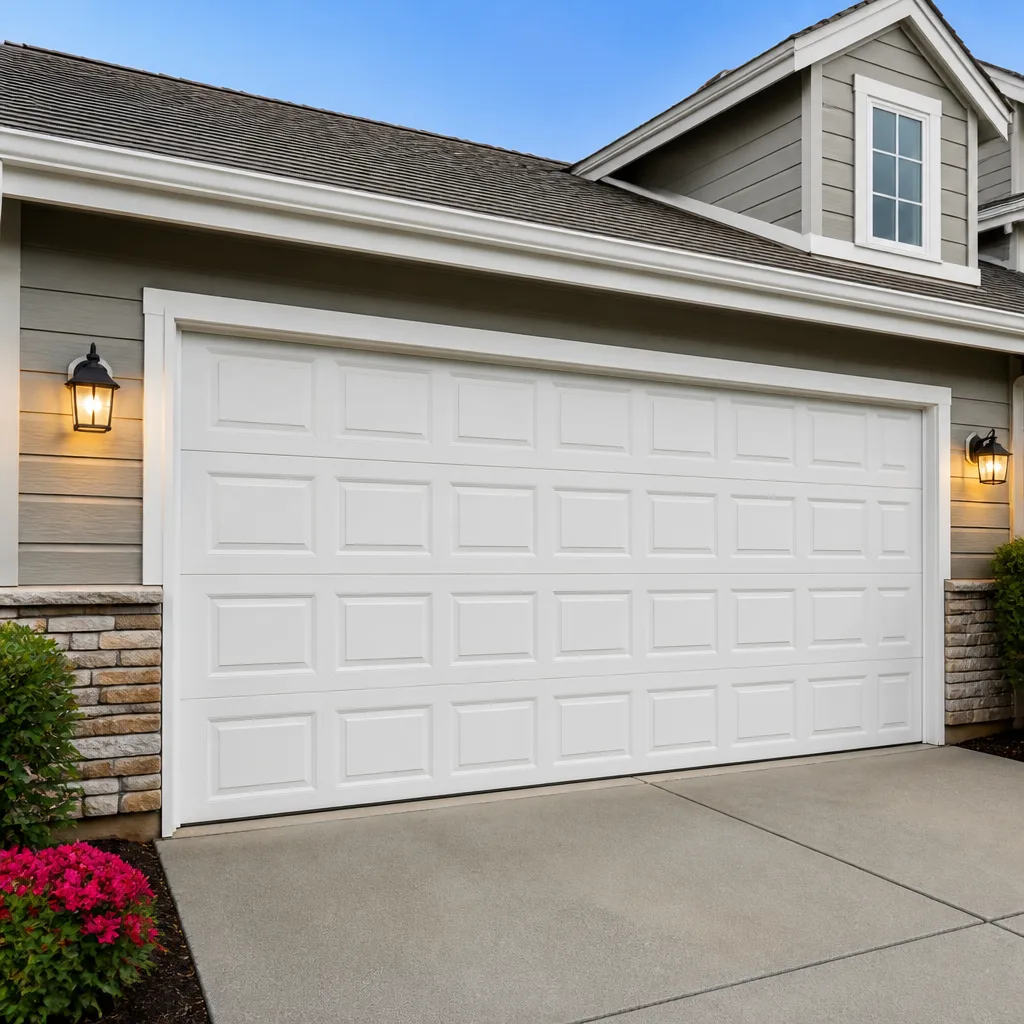
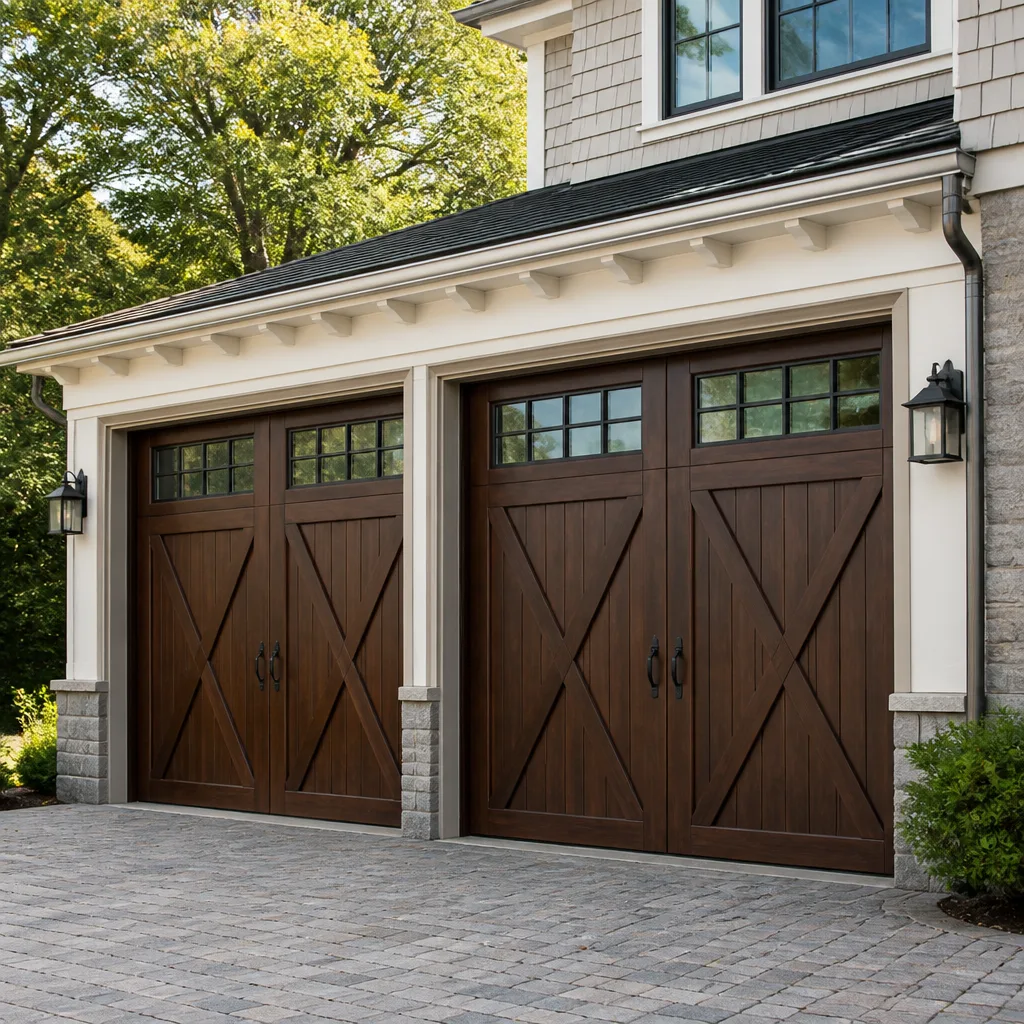
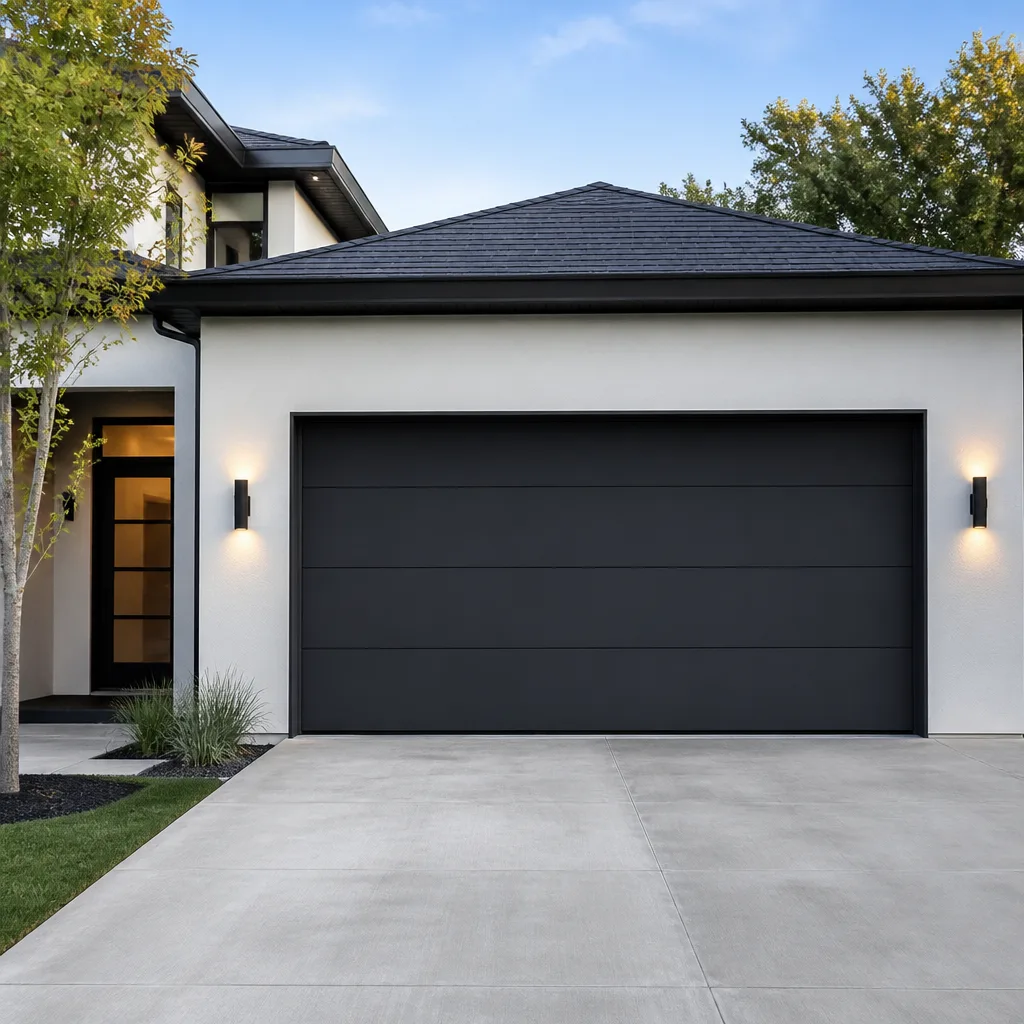
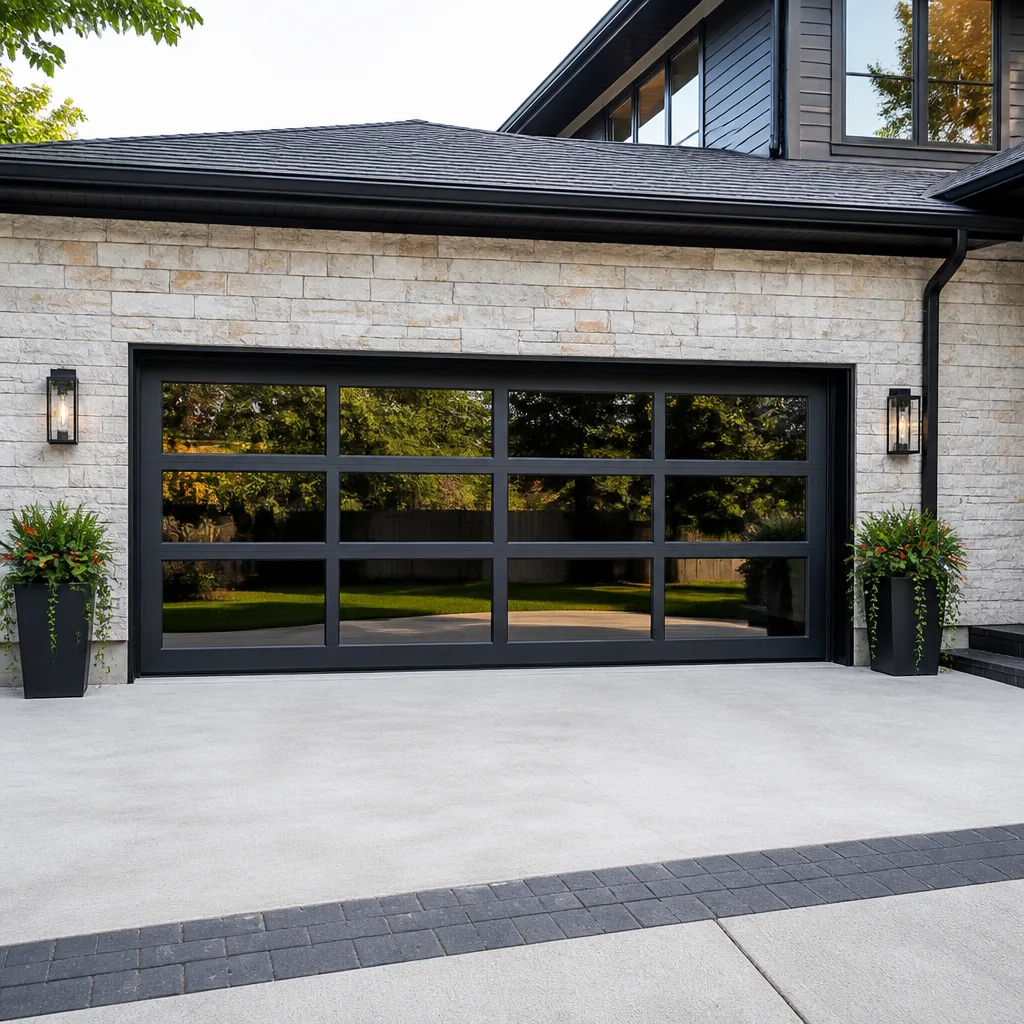
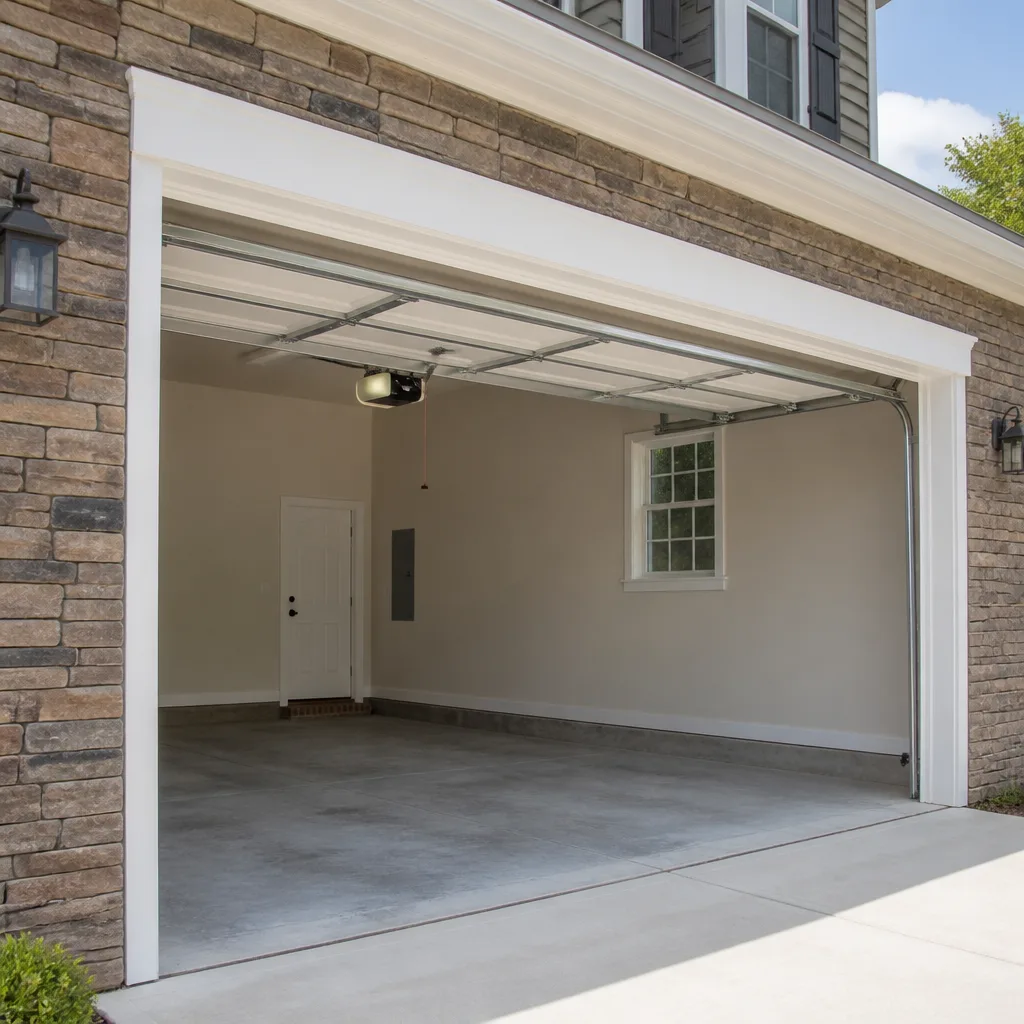
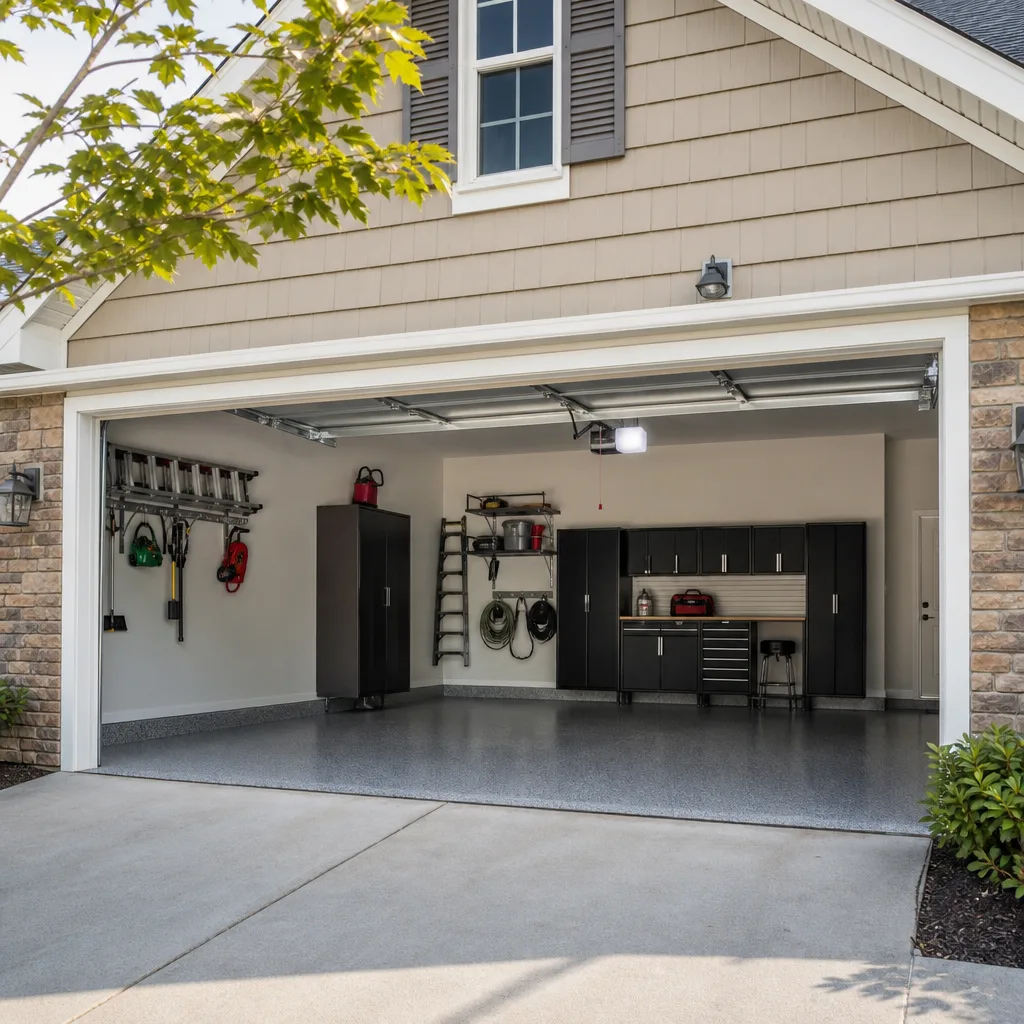
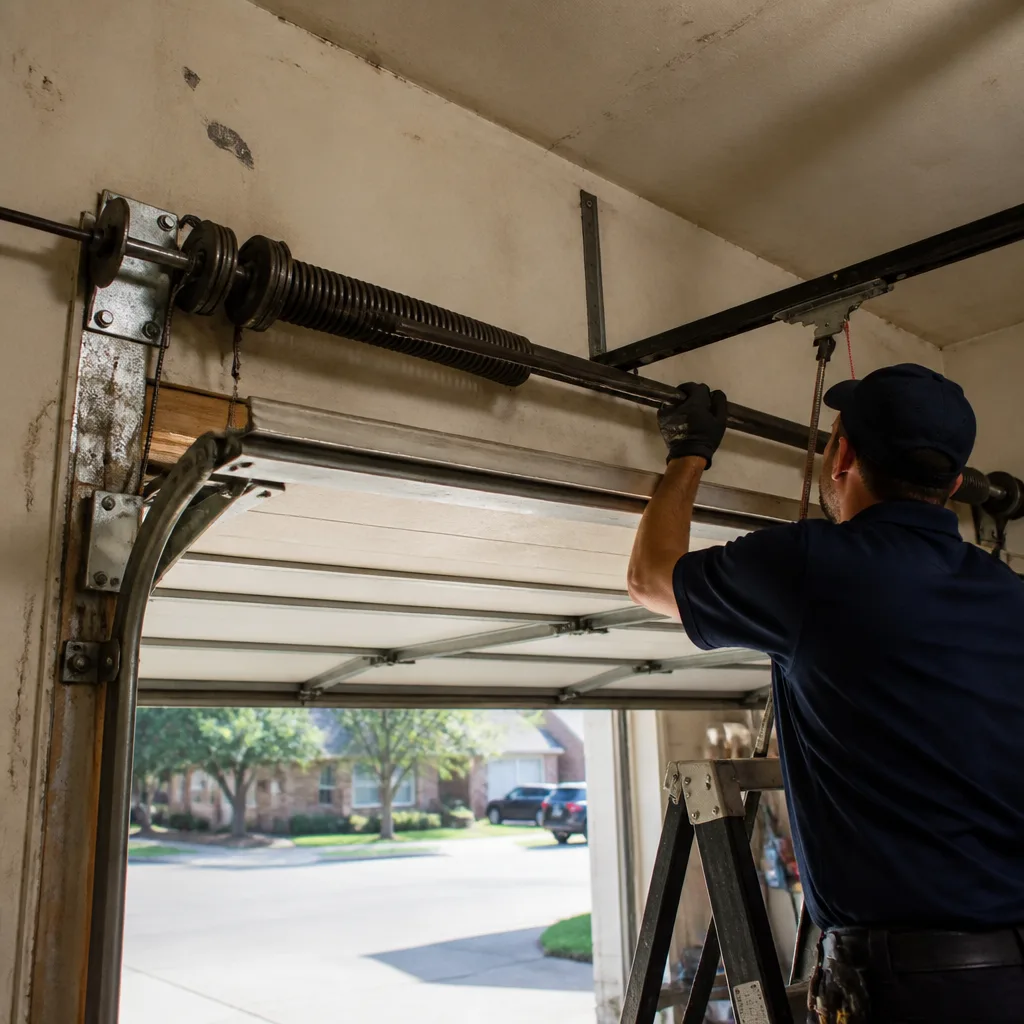 Before
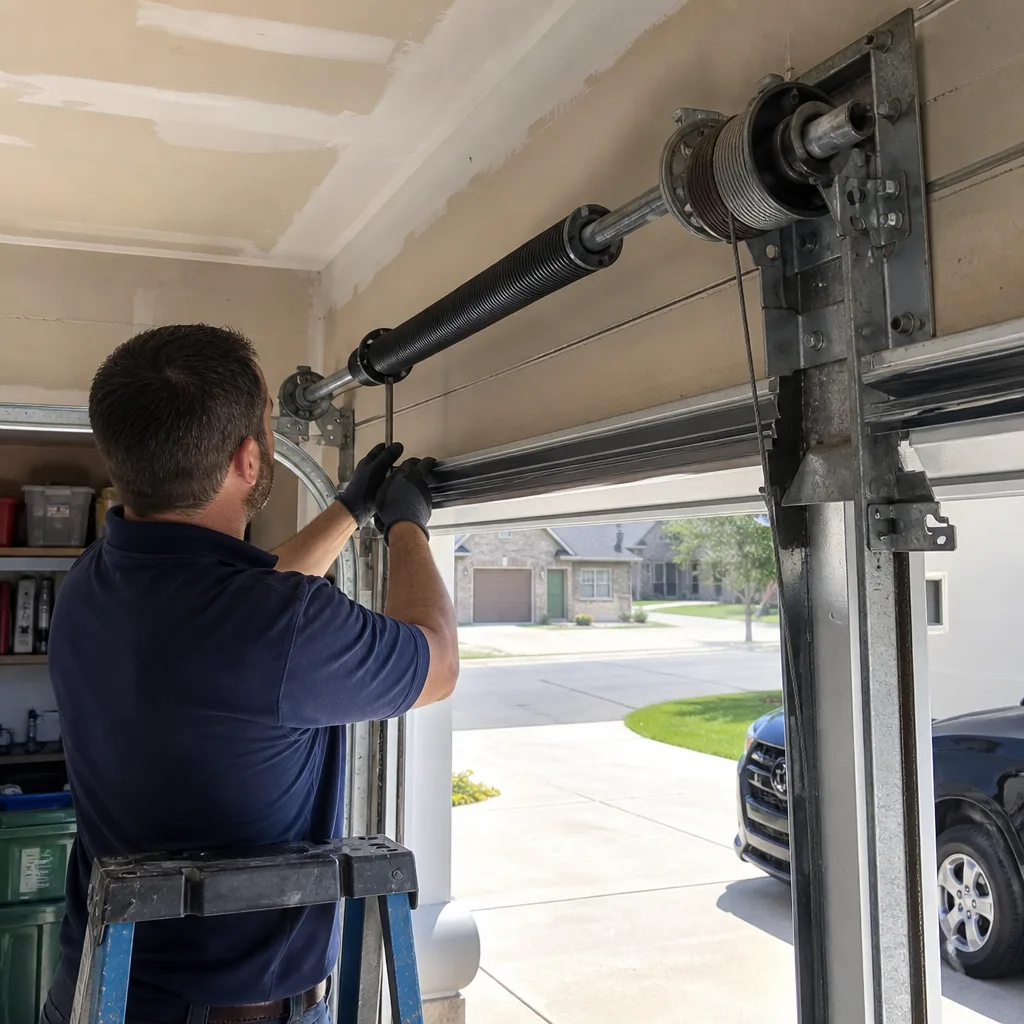 After
After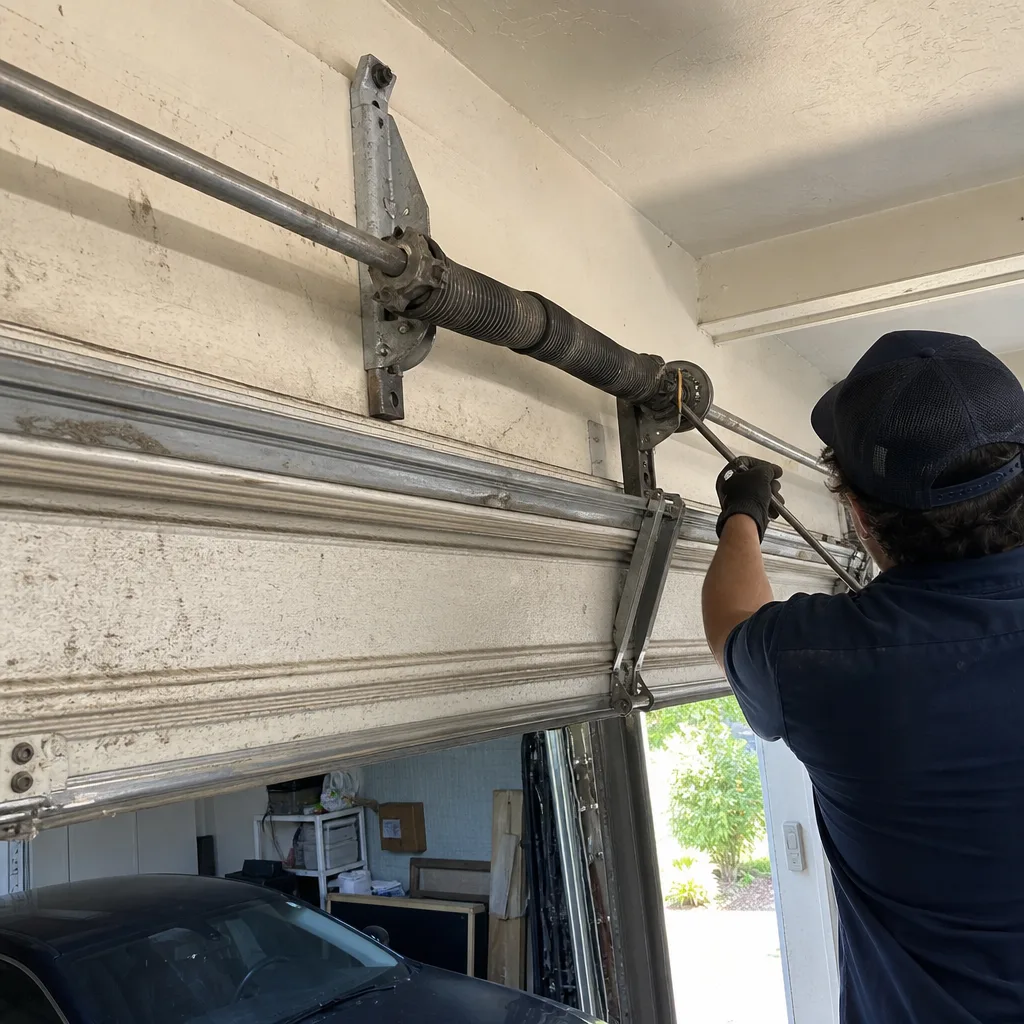 Before
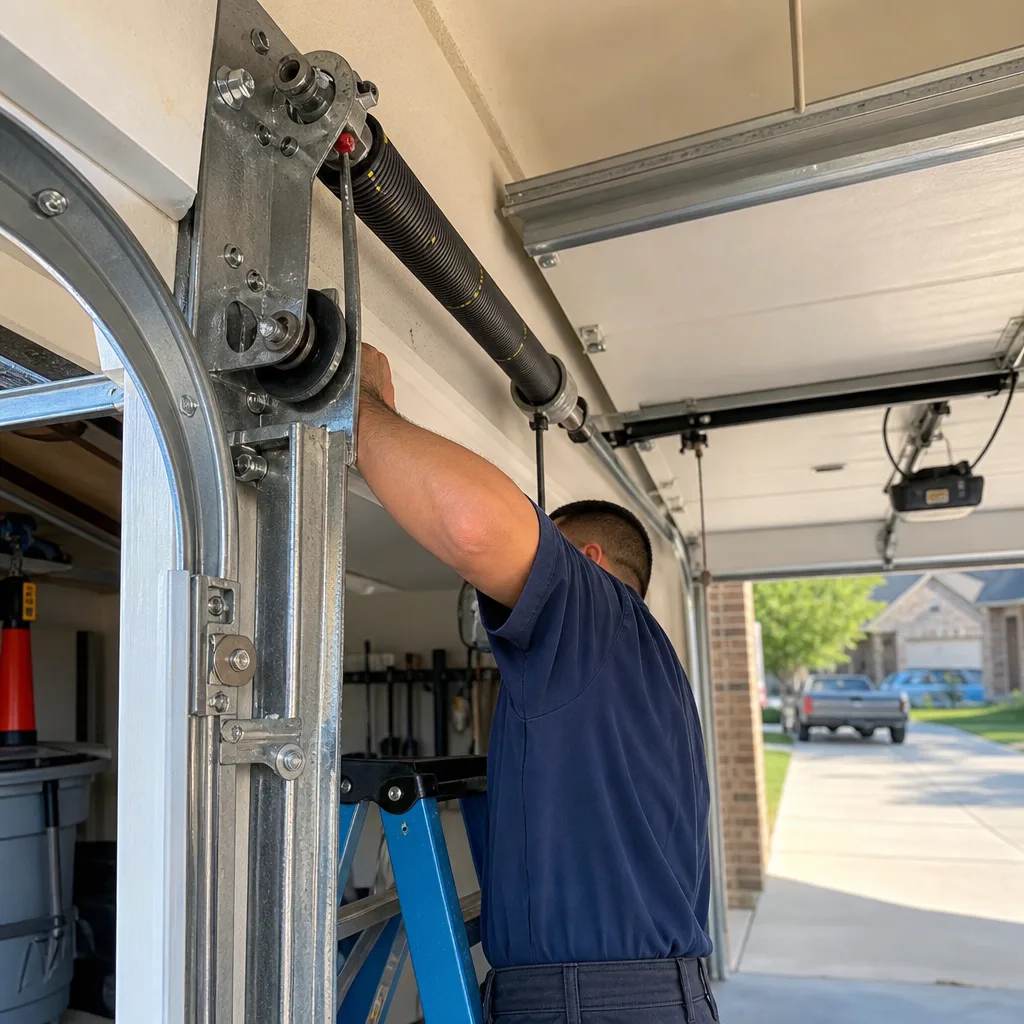 After
After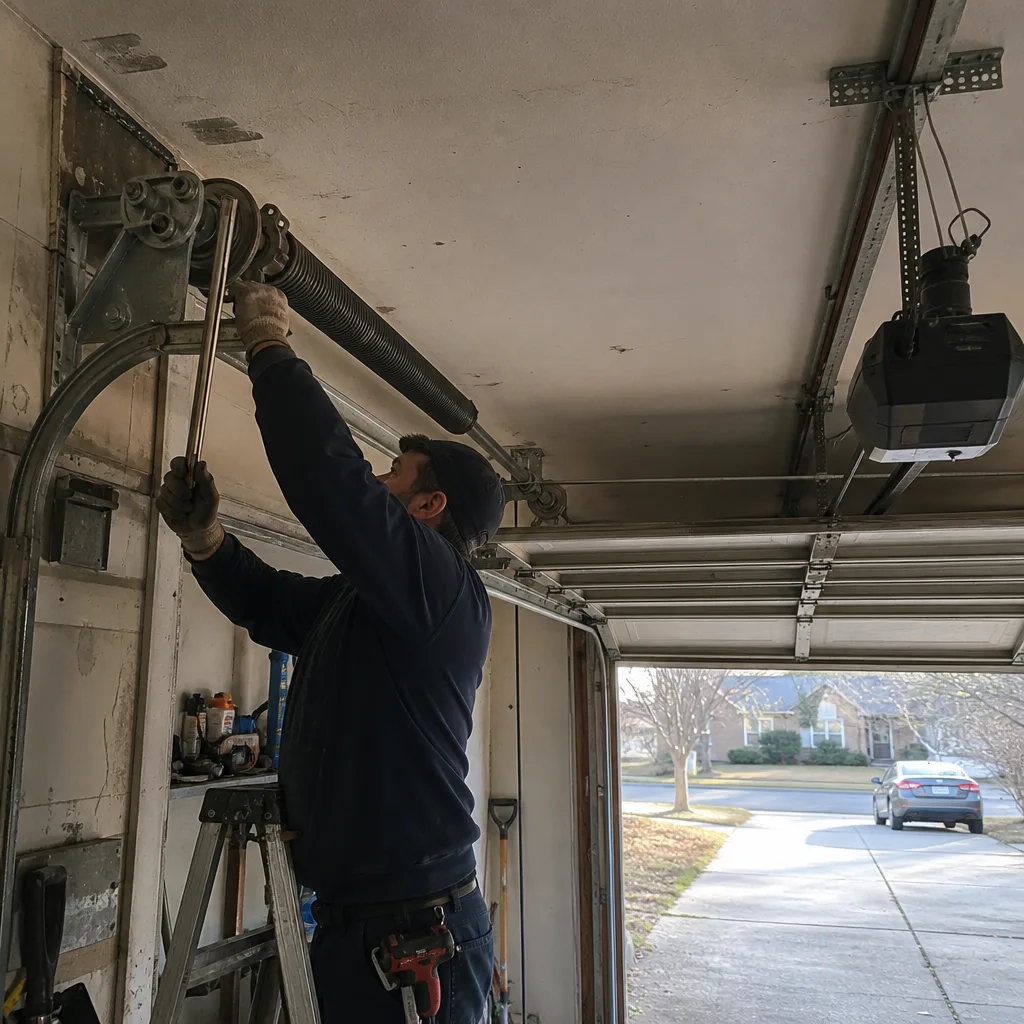 Before
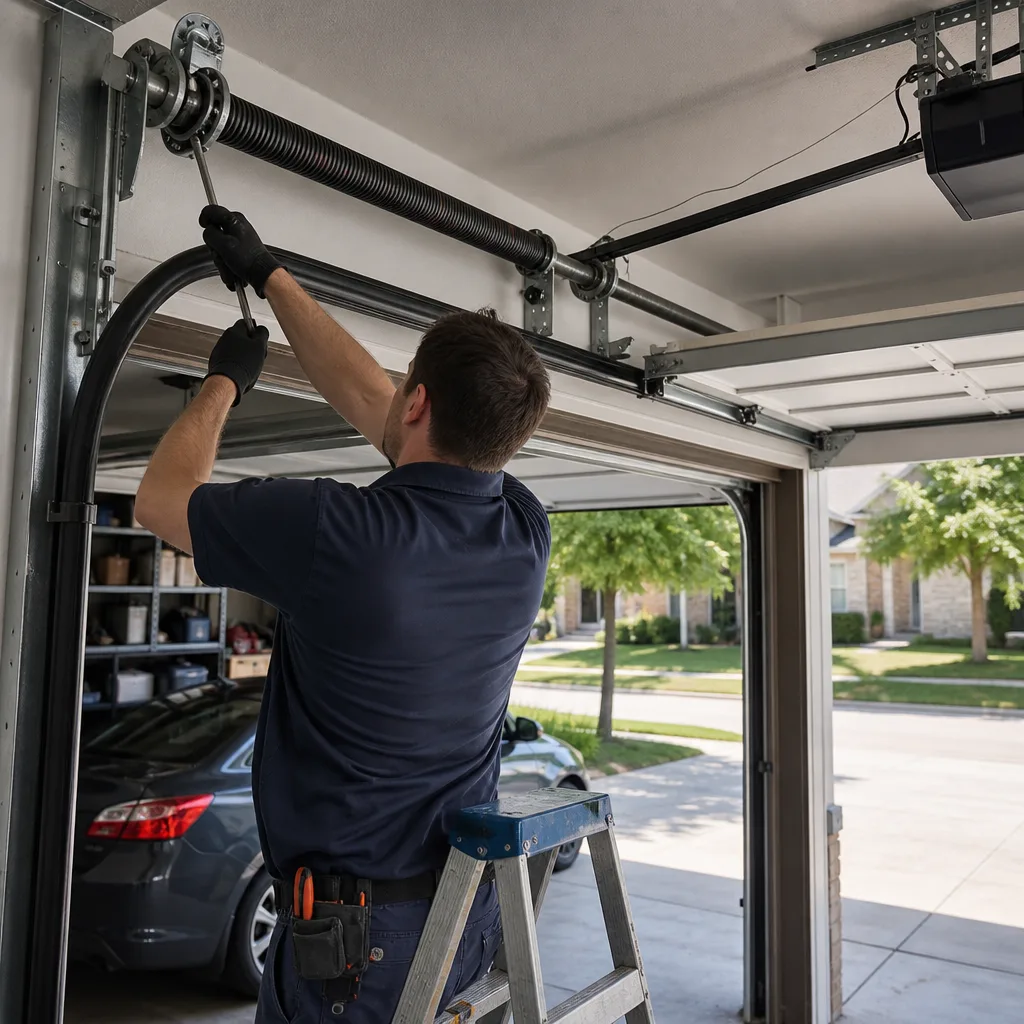 After
AfterThe Complete Guide to Garage Door in Frisco
Frisco’s soil expands and contracts more than 4 inches vertically in a wet-dry cycle. That movement is enough to shift a garage frame out of square and make a perfectly good door look like the installer’s fault. We’ve been called to homes in Newman Village and Phillips Creek Ranch where the door worked fine in March and scraped the header by August. This guide explains what actually happens to garage doors in Frisco’s specific climate and soil conditions, how to choose materials and designs that hold up here, and when repair makes sense versus full replacement.
Quick Answer
A garage door in Frisco needs to withstand extreme heat cycles above 100°F, expansive clay soil that shifts door frames seasonally, and HOA design requirements in master-planned communities. Most homeowners here will face spring replacement every 7-10 years, weather seal deterioration within 3-5 years, and eventual door replacement after 15-25 years depending on material and maintenance. The right door for Frisco is steel-backed, properly wind-rated, and matched to both your home’s architecture and your neighborhood’s covenants.
Table of Contents
- How Frisco’s Expansive Clay Soil Affects Your Garage Door
- What 100°F+ Summers Do to Springs, Seals, and Openers
- Navigating Frisco HOA Design Requirements
- Big-Box Doors vs. Trade-Stock Doors: The Longevity Gap
- Repair or Replace? A Decision Tree for Frisco Homeowners
- Choosing the Right Material and Insulation for North Texas
- A Frisco-Specific Maintenance Calendar
- Garage Door Opener Selection for Local Conditions
How Frisco’s Expansive Clay Soil Affects Your Garage Door
North Texas sits on the Blackland Prairie, a band of high-shrink-swell clay that runs from San Antonio through Dallas-Fort Worth. In Frisco specifically, the soil can expand 10% or more when saturated and shrink just as dramatically during dry spells. That 4-inch vertical swing we mentioned is not theoretical. We’ve measured it.
What this means for your garage door:
- Frame shift: The wood or steel framing around your garage door opening moves with the foundation. When the soil swells, the header can bow upward. When it dries, the jambs can pull inward. Either way, the rectangular opening becomes something else.
- Track misalignment: Garage door vertical tracks need to be plumb within 1/4 inch over the full height. A shifted frame pushes tracks out of alignment, causing rollers to bind, cables to wear unevenly, and the door to reverse on its safety sensors.
- Panel gap changes: The gap between your door and the weather seal should be consistent. Soil movement creates daylight at the bottom corners in wet seasons and over-compresses seals in dry ones.
In our experience, the neighborhoods built during Frisco’s 2000-2010 boom, like Grayhawk and The Trails, are now entering the period where soil movement shows up as operational problems. The concrete has had 15-20 years of expansion-contraction cycles. The original door installations, many done with standard tolerances, are now operating at the edge of their design limits.
What to watch for: Check the reveal, the gap between door and frame, at the top corners seasonally. If it varies more than 3/8 inch from winter to summer, your frame has shifted. Also listen for new scraping sounds or watch for the door slowing at the same point in its travel. These are early indicators before the opener strain becomes expensive.
We address these issues during our garage door repair in Frisco calls by checking frame square before adjusting anything else. A technician who tweaks spring tension on a shifted frame is treating the symptom. The door will be back to scraping within a season.
What 100°F+ Summers Do to Springs, Seals, and Openers
Frisco averages 25 days above 100°F each summer, with attic temperatures above a garage often reaching 140°F. Your garage door system lives in that heat for months at a stretch. Here’s what actually happens.
Torsion Springs
Standard torsion springs are rated by cycle life at 70°F. For every 10 degrees above that, spring fatigue accelerates. A 10,000-cycle spring in Frisco’s summer conditions performs more like a 7,000-cycle spring. The math is straightforward: if you use your door 4 times daily, that’s 1,460 cycles yearly. A spring that should last 6.8 years in moderate climates lasts closer to 4.8 years here.
We’ve replaced springs in Frisco’s Stonebriar area that failed at 4 years, and others in the same neighborhood that lasted 9. The difference was usually whether the garage faced west and absorbed afternoon sun directly on the door surface, heating the springs further.
Weather Seals
Vinyl and rubber seals harden and crack in sustained heat. A standard bottom seal in Frisco typically shows cracking within 3 years. The U-shaped vinyl retainer itself can distort, letting the seal slip out. We’ve found that dual-durometer seals, with a rigid mounting section and flexible contact surface, last roughly twice as long in local conditions.
Opener Motors
Chain-drive openers run hot in summer garages. The motor works harder when springs are fatigued, creating a feedback loop of strain. Belt-drive units run cooler and quieter, which matters in attached garages where the bedroom sits above. For Frisco’s heat, we recommend openers with thermal overload protection and at least 1/2 HP for single doors, 3/4 HP for doubles. The garage door opener in Frisco you choose should be rated for ambient temperatures to 140°F, not just the 120°F standard.
Steel Door Surfaces
Dark-colored steel doors in west-facing garages can reach surface temperatures of 180°F. The factory finish degrades faster. We’ve seen chalking and fade on 5-year doors that should have held color for 15. If your garage faces west and you prefer a darker color, consider a two-coat baked-on polyester finish over standard acrylic, or step up to a composite overlay door that doesn’t conduct heat the same way.
Navigating Frisco HOA Design Requirements
Frisco’s master-planned communities operate under some of the most detailed architectural control guidelines in Texas. We’ve worked in neighborhoods where the HOA specifies not just color but panel profile, window placement, and even the acceptable range of wood grain embossing depth. Understanding these rules before you buy saves the cost of a door that gets rejected during the approval process.
Common HOA Requirements in Frisco
- Color matching: Many HOAs require submission of a physical color chip or manufacturer sample, not a photograph. The approved palette often excludes bright whites, bold reds, or non-earth tones.
- Window style: Arched top sections, rectangular lites, or no windows at all, specified by architectural zone within the neighborhood.
- Panel design: Raised panel, recessed panel, or flush. Some communities in The Grove and Lawler Park require carriage house styling on street-facing garages.
- Material appearance: Even when steel is permitted, the HOA may require a wood-grain emboss that reads as authentic from the curb.
The approval process typically takes 2-4 weeks in Frisco’s larger communities. We recommend submitting before ordering. A door that sits in our warehouse waiting for approval is preferable to one installed and then contested. We’ve seen homeowners in Starwood and later in Hollyhock have to replace doors that skipped this step.
Clopay’s Gallery and Canyon Ridge collections, along with Amarr’s Classica and Hillcrest lines, appear frequently on Frisco HOA pre-approved lists. Wayne Dalton’s 9700 series also shows up in older covenants. If you’re uncertain, we can check our records from previous installations in your specific neighborhood or contact your HOA architectural committee with the proposed specifications.
Big-Box Doors vs. Trade-Stock Doors: The Longevity Gap
The garage door sold at a home improvement warehouse and the one supplied by a trade specialist like Mainspring Garage Door Co. home often carry the same brand name. They are not the same product.
Construction Differences
| Component | Big-Box Version | Trade-Stock Version |
|---|---|---|
| Steel thickness | 25-27 gauge | 24-25 gauge minimum |
| End stiles | Stamped steel | Reinforced steel or extruded aluminum |
| Hinges | 18-gauge, 2 points | 14-gauge, 4 points |
| Spring cycle rating | 5,000-7,500 cycles | 10,000-30,000 cycles |
| Track gauge | 0.053 inch | 0.062-0.075 inch |
| Hardware kit | Universal fit | Door-matched, sized to opening |
The trade-stock door costs more upfront, typically 30-50% above the retail unit. But the hardware alone, springs, hinges, rollers, and track, outlast the big-box equivalent by years. In Frisco’s heat and soil conditions, that difference compounds. A thin track warps faster under thermal expansion. Light-gauge hinges fatigue under the extra cycles caused by frame shift. The homeowner who saves $400 on the door often spends $800 more on repairs and early replacement.
We’ve removed 8-year-old big-box doors from Frisco homes and installed trade-stock units that we expect to see again at the 20-year mark for maintenance, not replacement. The garage door installation in Frisco we perform uses only trade-stock components sized to your specific opening, not a universal kit adapted to fit.
Repair or Replace? A Decision Tree for Frisco Homeowners
This is the question we hear most often. The answer depends on door age, damage type, and what you’re trying to achieve.
Step 1: Determine Door Age and Material
- Steel door under 12 years: Usually worth repairing unless multiple panels are damaged or rust is present at the bottom.
- Steel door 12-20 years: Evaluate based on condition. A single panel dent or failed spring is repairable. Multiple hinge cracks, track wear, and faded finish together suggest replacement.
- Steel door over 20 years: Replacement is typically more economical. Parts availability declines, and energy efficiency standards have improved substantially.
- Wood door any age: Repair rot and hardware indefinitely if the frame is sound. Replace when rail-and-stile joints fail or panel warping exceeds 1/2 inch.
- Composite/fiberglass door under 15 years: Repairable for most issues. Replace if the skin has delaminated from the frame.
Step 2: Assess Damage Type
- Single panel damage: Repair if the manufacturer still produces that panel profile and color. We match Clopay, Amarr, and Wayne Dalton panels from our supplier network. If the door is discontinued, replacement may be required.
- Spring failure only: Repair, always. Spring replacement is routine and cost-effective even on older doors.
- Opener failure: Replace the opener independently unless it’s integrated with a proprietary door system.
- Multiple component failures: When springs, cables, rollers, and hinges all need attention simultaneously, the labor cost approaches that of a new door with new hardware.
Step 3: Consider Frisco Resale Context
Frisco’s housing market rewards curb appeal. A faded, dented, or visibly aged garage door can reduce offers by 1-3% on a $500,000 home, far exceeding the cost of replacement. If you’re selling within 2 years and the door shows wear, replacement is often the better investment. If you’re staying 5+ years, repair and maintain until the economics shift.
Our standing offer: a free second opinion on any written estimate. If another company has recommended replacement and you’re uncertain, we’ll inspect and give you our assessment with no obligation.
Choosing the Right Material and Insulation for North Texas
Frisco’s climate demands specific material choices. Here’s how the common options perform locally.
Steel: The Default Choice
Steel doors dominate Frisco for good reason. They resist the humidity spikes that come with Gulf moisture pushing north, and they don’t warp in heat. For local conditions, we specify:
- 24-gauge minimum for single-layer doors, 25-gauge for insulated sandwich construction
- Galvanized substrate with baked-on polyester or polyurethane finish
- R-value of 9-12 for attached garages, where thermal transfer affects adjacent living space
- R-value of 6-9 for detached garages or those with no rooms above
In neighborhoods like Panther Creek and Edgestone, where homes often have bonus rooms above the garage, an R-12 or higher door with polyurethane foam injection makes a measurable difference in cooling costs. We’ve had homeowners report 8-12 degree temperature reduction in the room above after upgrading from an uninsulated steel door.
Wood and Wood Composite
Wood doors suit the craftsman and farmhouse architecture common in Frisco’s newer infill and custom neighborhoods. They require more maintenance: restaining or repainting every 3-5 years, seal replacement at the bottom to prevent moisture wicking. The composite overlays from Clopay and others offer the appearance of wood with steel’s stability. We install these in communities where the HOA mandates a traditional aesthetic.
Aluminum and Glass
Contemporary homes in mixed-use areas near The Star or in smaller custom builds sometimes specify full-view aluminum doors. These conduct heat aggressively. In Frisco’s sun, the interior surface can reach 120°F. We recommend low-E glass and thermal break frames if you choose this style, and we caution against west-facing installations without exterior shading.
Insulation Type
Polystyrene panel insulation is common in entry-level doors. Polyurethane foam-in-place provides better thermal performance and structural rigidity. For Frisco, we recommend polyurethane in any door that sees daily use. The foam bonds to the steel skins, reducing the flex and noise that come with temperature swings.
A Frisco-Specific Maintenance Calendar
Garage door maintenance is not complicated, but timing matters in this climate. Here’s what we recommend based on 42 years of watching North Texas weather patterns.
Spring (March-April)
- Inspect weather seal for winter cracking. Replace if hardened or torn.
- Check door balance: disconnect opener and lift manually. The door should stay at mid-travel without drifting. If it falls or rises, spring tension needs adjustment.
- Lubricate rollers, hinges, and springs with silicone-based lubricant. Avoid WD-40, it attracts dust and gums up in heat.
- Test safety reverse: place a 2×4 flat on the floor and close the door. It should reverse on contact.
Early Summer (May)
- Inspect for soil-shift indicators: new gaps, binding, or noise changes.
- Check opener force settings. Heat-expanded components may require slight adjustment.
- Clean photo-eye sensors. Pollen and dust accumulation is heavy in Frisco’s spring green-up.
Late Summer (August-September)
- Re-lubricate if the door has become noisy. Summer heat degrades lubricant faster.
- Inspect cables for fraying. Heat and tension fatigue show up as broken strands near the bottom bracket.
- Check door exterior finish for chalking or fade. Address before winter moisture sets in.
Fall (October-November)
- Replace weather seal if it was marginal in spring. Cold drafts increase heating costs.
- Tighten all hardware. Expansion-contraction cycles loosen bolts over a season.
- Test battery backup on opener if equipped. Power outages spike in winter storm season.
Our $89 Seasonal Tune-Up covers all of this in a single visit. Most Frisco homeowners who schedule annually avoid the emergency calls that come at inconvenient hours.
Garage Door Opener Selection for Local Conditions
The opener works harder in Frisco than in milder climates. Heat reduces motor efficiency, and soil-shift-induced binding increases load. Here’s how to choose.
Drive Type
- Belt drive: Quietest, coolest running. Best for attached garages and bedrooms above. We install LiftMaster and Chamberlain belt drives most often in Frisco’s newer homes.
- Chain drive: Most economical, but louder and hotter. Suitable for detached garages where noise doesn’t matter.
- Wall-mount (jackshaft): Mounts beside the door, freeing overhead space. Excellent for high ceilings and storage lifts. Requires a torsion spring system in good condition.
Power and Features
Minimum 1/2 HP for single steel doors, 3/4 HP for double doors or any wood construction. Look for these features that matter in Frisco:
- Thermal overload protection: Shuts the motor before damage in extreme heat.
- Battery backup: Required by Texas law on new installations since 2022. Keeps door operable during outages.
- MyQ or equivalent smart connectivity: Useful for second-home owners and rental properties in Frisco’s investment-heavy market.
- Soft start/stop: Reduces component stress, especially valuable when frames are slightly out of square.
Genie’s SilentMax and LiftMaster’s Elite series both perform well locally. We carry both on our trucks and can typically install same-day if your opener fails unexpectedly.
Common Mistakes to Avoid
- Ignoring the first sign of binding. A door that hesitates at one point in its travel is telling you something. Waiting turns a track adjustment into a bent panel and failed opener.
- Buying a door online without measuring the actual opening. Frisco’s soil movement means the opening may not match the original construction plans. We measure every opening before ordering, every time.
- Choosing color based on the sample indoors. North Texas sun alters appearance. We bring large outdoor samples and recommend viewing them in morning, midday, and afternoon light before deciding.
- DIY spring replacement. Torsion springs store lethal energy. We’ve responded to injuries from broken winding bars and improperly secured cones. This work requires training and proper tools.
- Neglecting HOA approval. The architectural committees in Frisco’s master-planned communities have enforcement power. Fines and mandated replacement are expensive shortcuts.
- Matching a new door to faded trim. Your existing trim has weathered. We recommend obtaining a fresh paint sample of your proposed door color and comparing it to cleaned trim, not the current appearance.
- Assuming all steel doors are equal. Gauge, coating, and hardware quality vary enormously. The 25-gauge door with 5,000-cycle springs costs less today and more over its shortened life.
When to Call a Professional
Call when you notice binding, new noise, or uneven movement. Call when a spring breaks, a cable frays, or the opener reverses unexpectedly. Call when you’re considering replacement and need an honest assessment of repair versus new installation. Call when your HOA requires documentation or when you want to understand what soil movement has done to your frame before committing to a solution.
We do not recommend DIY work on torsion springs, cable systems, or opener force adjustment. These components are under tension and can cause serious injury without proper training. A door that falls or a spring that releases unexpectedly can damage property and harm people.
Mainspring Garage Door Co. offers free estimates in Frisco. We’ll inspect your door, measure your opening, check for frame shift, and explain your options with the price stated before any work begins. Call (945) 495-3756. A live person answers, including nights, weekends, and holidays.
Frequently Asked Questions
A quality steel garage door in Frisco typically lasts 15-25 years with proper maintenance, though springs need replacement every 7-10 years due to heat fatigue. Doors in west-facing garages or those with lower-grade hardware may need replacement closer to 12-15 years. Call (945) 495-3756 for a free condition assessment.
Most common repairs in Frisco range from $180-$340 for spring replacement, $120-$220 for cable or roller service, and $280-$450 for opener repair or replacement. We state the flat price before starting any work, and our $50 off any repair over $250 applies automatically. Call (945) 495-3756 for an exact quote on your specific issue.
Can Frisco’s heat really damage my garage door opener?
Yes, sustained temperatures above 120°F in a garage attic space can reduce motor life by 30% or more. Openers without thermal protection may fail prematurely in summer months. We recommend belt-drive units with thermal overload protection for Frisco’s climate. If your opener is in a hot garage and over 8 years old, consider proactive replacement before failure.
Nearly all master-planned communities in Frisco require pre-approval for garage door replacement. The process typically takes 2-4 weeks and requires manufacturer specifications and color samples. We handle documentation submission for our installation customers and maintain records of previously approved styles in most Frisco neighborhoods.
This is almost always frame shift from expansive clay soil swelling when moist. The door opening becomes slightly out of square, binding rollers and stressing the opener. We check frame alignment before adjusting anything else. Sometimes the fix is track realignment; sometimes the frame itself needs shimming or structural correction.
If the door is steel, has no rust, and the damage is limited to springs or a single panel, repair usually makes sense. If you’re facing multiple component failures, faded finish, or planning to sell within two years, replacement is often the better value. We provide free second opinions on any written estimate to help you decide.
The Bottom Line
A garage door in Frisco faces challenges that generic buying guides ignore: soil that shifts the frame, heat that fatigues springs and motors, and design rules that govern appearance. The right door is steel-backed, properly insulated, matched to your neighborhood’s requirements, and installed with hardware rated for local conditions. Maintenance timed to our climate prevents the emergency repairs that always seem to happen at the worst moment. Whether you’re maintaining an existing door or choosing a replacement, start with accurate information about what this specific environment does to the product. For more guides & resources, explore our blog. Then get a square deal from people who will still be here to stand behind it.
Written by Carl Dutton, Owner at Mainspring Garage Door Co., serving Frisco since 2016.